SFC’s Chloe Turner on why sport fishing is reeling in veterans
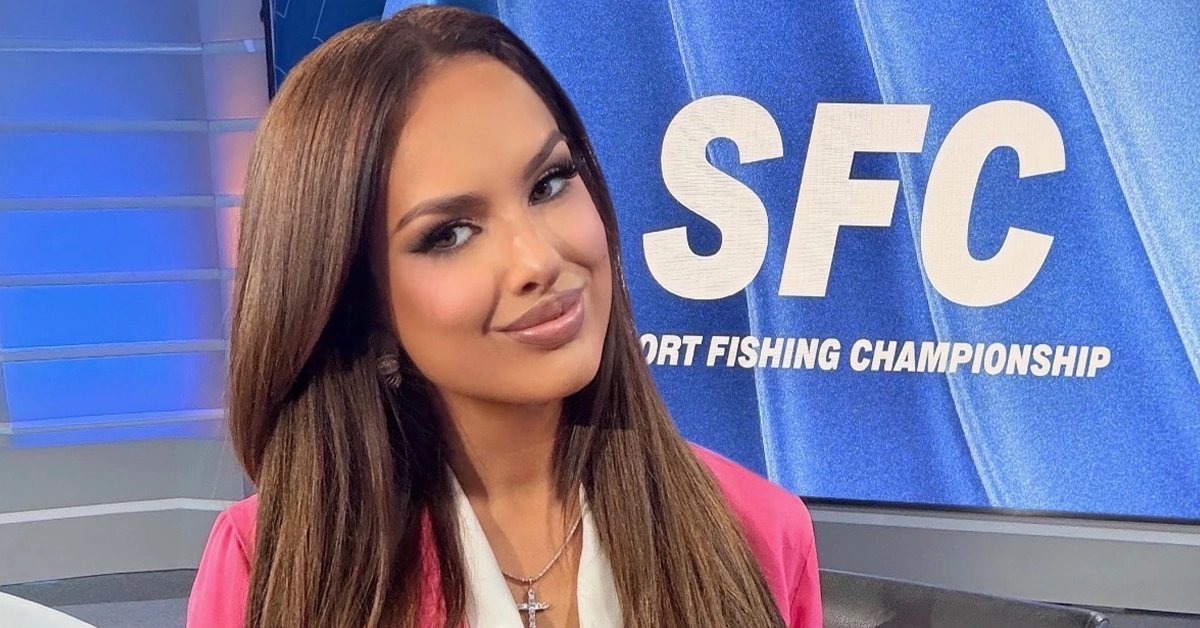
When Chloe Turner and her mother started going through boxes that belonged to her late grandfather, they found uniforms and flight logs from his time as a World War II naval aviator, along with a Purple Heart whose full story the family had never pieced together.
“We found all this history we didn’t know anything about,” Turner told We Are The Mighty. “It was crazy. How did no one have the story on this?”
It was all the more poignant because she told me this as we sat on the flight deck of the USS Yorktown, a World War II aircraft carrier with 12 battle stars and a Presidential Unit Citation—and one her grandfather, Lt. W.G. “Buck” Rogers, used to land on in 1943.
The discovery of her grandfather’s military legacy sits with Turner as she stepped into one of the most visible roles in a growing professional sport. SFC has set out to give offshore big-game fishing the structured platform, television production, and year-round narrative that the PGA Tour brought to golf.
Getting viewers excited to watch the fastest-growing saltwater fishing league in the world wasn’t on her radar. She certainly never expected to be on ESPN+. Turner was a sports management grad from Texas A&M who spent years working for an NFL agent, building a career in the business of professional athletics. But fishing caught her at a young age and never released her.
“The women in my family are big on the outdoors,” Turner said. “My dad is a heart surgeon and spend a lot of his time saving lives. I’m blessed to have two incredible parents.”
“A lot of people outside the fishing world probably assume that fishing is a male-dominated sport and industry. That’s just one of the many reasons I think SFC is so special. Our Chief of Staff, Courtney Hueston, is an incredible leader who wears countless hats within the company and plays a huge role in the organization’s success. She’s also an incredible angler herself, and she’s just one example of the talented people behind the scenes who make SFC what it is.”
Turner has been following SFC since its inception, because while she didn’t get to do a lot of offshore fishing growing up, she is also a sport fishing competitor in her own right. She’s even won some competitions. Being an onscreen host might not have been in the plan, but it came naturally.
“I followed SFC since the day it started. I never thought I would be working for a company I was such a dedicated fan of,” she said. “People see me, Robbie [Floyd], and Peter [Miller] on camera, and I’m incredibly blessed to work alongside them. They’re amazing at what they do. Not everyone gets to say they work alongside their mentors, and for that I’m so grateful. But it’s the people you don’t see on camera who also make up the brand.”
Founder and Commissioner Mark Neifeld launched SFC in 2021 with a simple, ambitious goal: bring people together through world-class competition. In doing so, he built what has become the largest saltwater fishing championship series in the world.
“Mark Neifeld took the sport of offshore fishing and created a way for everyone to experience it,” said Turner. “Not everyone has the opportunity to go offshore, but through SFC, viewers at home can truly feel like they’re on the boat and part of the team. He has built a viewing experience that not only resonates with lifelong anglers but also captivates people who may not know much about fishing at all. That’s incredibly difficult to do, and I think it’s one of the things that makes SFC so unique.”
For military service members and veterans scrolling past it on their tablets in a barracks or at home after a long day, Turner has a message: this is for you, too.
What Is the Sport Fishing Championship?
Before you can appreciate what Turner and her colleagues are doing in front of the camera, you need to understand what’s happening behind it and on the water.
SFC operates like any major professional sports league. It’s divided into two conferences: the Atlantic Division and the Gulf Division, each fielding angling clubs representing different regions of the U.S. coastline, from Southern Texas to New England. The 2026 season features 13 angling clubs competing across a 12-tournament regular season, culminating in the Zane Grey Championship playoffs.
The clubs have owners you might recognize. Scottie Scheffler, the world’s top-ranked golfer and reigning SFC league champion, owns the Texas Lone Stars Angling Club. NFL great Raheem Mostert, as well as Florida Georgia Line’s Brian Kelley, also own clubs in the league.
SFC has attracted the crossover celebrity ownership model that made leagues like the PGA Tour’s TGL format successful, pulling audiences in from multiple sports.
The tournaments are held in what SFC calls “championship towns,” angling destinations along the Eastern Seaboard, the Gulf of Mexico, and the Caribbean, including stops in the Bahamas. The 2026 season kicked off on April 17 in Key West and runs through late October.
The Rules of Sport Fishing
It’s much easier to get into the sport once you know what you’re looking for. This is offshore, bluewater competition where teams of anglers aboard sportfishing vessels, running 50, 100, even 155 miles offshore from tournament headquarters in search of the most valuable fish in the ocean.
At the SFC’s Carrier Cup competition in Charleston, for example, boats operate within a 155-mile radius of the harbor. The Gulf Division events can stretch across the entire Gulf of Mexico, with boats heading to one or two prime areas and returning to the dock each day.
Each boat carries a captain, deckhands, and anglers; a team that typically numbers between five and 15 people, depending on the duration of the tournament.
“There’s a method to all of it,” Turner said. “Each team has different things they’re better at. Some teams may prefer to use live bait, while others prefer artificial lures. There can definitely be a bit of a home-field advantage, depending on where the tournament is held and what techniques those crews are most familiar with. And then, on top of that, they have to adjust as the conditions change throughout the day.”
The scoring system rewards the difficulty of the catch. In SFC competition, blue marlin are among the most valuable billfish because they’re also among the hardest. The fight tests the skill, teamwork, and endurance of the entire crew.
The scoring rules are consistent: blue marlin are typically the highest scoring, while other billfish don’t score as high. A new rule introduced in December 2025 allows for a “Billfish Grand Slam Bonus:” Teams can earn an extra 200 points for catching three different species of billfish (large predatory fish, like marlin or swordfish) in a single event.
Fish size or weight isn’t isn’t the purpose of the competition; it’s the release itself that earns the points. That means conservation is baked into the competition, not treated as an afterthought.
“Every single fishing license that you buy goes towards conservation,” Turner said. “Helping conserve our sport.”
Strategy, then, is the crux of the competition. A team that hunts only blue marlin might go home empty-handed if the fish don’t cooperate. A team running kite-fishing spreads for sailfish might accumulate points more consistently.
For some, they want to risk it and gamble on catching the big points, while other teams are happy to pull in lower-scoring point more consistently. It’s like the fundamentals of basketball—building points back to back versus just shooting three-pointers all the time. If the gamble pays off, you can win big.
The preparation alone is staggering. Competing crews spend weeks, sometimes months, before a tournament rigging the boat, checking sonar equipment, running engine diagnostics, sourcing the right bait, and studying ocean temperature charts and current maps to find where the fish will be feeding.
Sport Fishing Made For TV
Watching fishing competition on television has come a long way since the days of Bobby Lord on The Nashville Network. SFC’s broadcast operation uses technology to catch not just the crews, but everything going on above and below the waterline: robotic cameras, underwater drop cameras, and drones capture the action live and relay it via Starlink to commentators like Chloe Turner.
“You’ve always had YouTubers documenting their offshore fishing adventures,” she said. “What viewers don’t always see are the hundreds of hours everyone behind the scenes puts in.”
Cameramen embedded on the boats give viewers a real-time view of the action. The daily social hour—which Turner hosts and streams live on YouTube during tournament coverage—creates entry points for fans who’ve never touched a fishing rod.
“What Sport Fishing Championship does is bring viewers inside a professional competition from start to finish,” said Turner. “It doesn’t just focus on the catch itself. It shows the strategy, preparation, teamwork, and decisions that happen throughout the tournament, illustrating just how much really goes into the sport of fishing.
The parallels to military culture are hard to miss once you watch a few events. The boat operates as a small unit: defined roles, rotating watches, shared credit for success, and collective responsibility when things go wrong. Preparation and attention to detail determine outcomes as much as raw athletic ability.
“You can be in such good shape and know the muscles that you use to reel in fish, you don’t use every single day,” she said. “Even if you have a six-pack and you’re running marathons, it’s still going to be awkward.”
Reeling in a 500-pound blue marlin is a full-body effort that primarily demands core strength. Turner, who does cardio and Pilates, and has competed through a significant back injury sustained in a car accident, said the key is learning to drive the reel with your core rather than your arms and back.
Core strength and body positioning matter more than a six-pack when the fish is 300-plus pounds, and the clock is running. It’s a technique that takes time on the water to develop, not time in the gym.
For Turner, a self-described history nerd who would rather watch World War II documentaries than reality television, it’s also a personal connection. Her appreciation for her grandfather’s service extends to all veterans, some of whom are competing in SFC.
The connection between the armed forces and the outdoors is natural bridge to audiences who value service, teamwork, and time spent in the elements. There’s a reason most major military installations have resources to connect service members to the outdoors.
The Army MWR’s outdoor recreation program lists fishing access as part of its mission to “build a sense of community, promote skill development, and provide for stress relief,” with the added benefit of contributing to “military mission readiness.”
Research consistently links outdoor activity to mental health benefits for veterans. A 2021 study found that outdoor recreational programs improved psychological well-being among military veterans with PTSD.
The VA itself partners with organizations like Project Healing Waters Fly Fishing as part of its Whole Health program, citing fishing’s therapeutic effects on veterans experiencing PTSD.
For Turner, fishing is also a matter of camaraderie, the same quality that makes military service feel like a team sport.
“When you reel in a blue marlin, it’s not just the person reeling in the fish,” she said. “That’s not just their fish. It’s the team, the captain, the deckhand. I feel like that’s the whole boat’s fish. And so I feel like just the camaraderie, the people that are involved in the sport. it’s just a very welcoming and inspiring sport to be a part of.”
The boat is a unit, and its crew has different roles and specializations, but one shared objective. The captain makes the strategic calls. The deckhands manage the lines. The angler fights the fish. Nobody wins alone.
Turner’s advice for anyone, military or civilian, who wants to get into fishing is disarmingly simple.
“Just start. A lot of people are intimidated to get into it. But it’s like just pick up a rod and reel.”
Her own gear philosophy has remained consistent after years of fishing. She attends iCast, the largest saltwater and freshwater fishing trade show in the U.S., she’s sponsored by Daiwa, a high-grade tackle brand, and she still, unapologetically, grabs whatever’s on the top shelf at Walmart when she’s in a pinch.
“At the end of the day, I may be one of the people viewers recognize, but SFC is built by an incredible team,” Turner said. “I’m just grateful to be one small part of it.”
Turner is one of the lead in-studio broadcast hosts for the Sport Fishing Championship (SFC), and was aboard the Yorktown in Charleston Harbor for SFC’s inaugural Carrier Cup competition, the first of a series of tournaments held in cities that host aircraft carrier museums. Future Carrier Cup tourneys will be held from the USS Lexington in Corpus Christi in 2027, and at New York’s USS Intrepid in 2028.
For those who want to watch, SFC streams live on ESPN+ for every professional tournament in 2026, with select coverage on ESPN2. The pre-show social hour is free on YouTube. Full seasons are available on Hulu after broadcast. You don’t need a cable subscription to watch competitive offshore fishing at the highest level. You just need a streaming account.
Don’t Miss the Best of We Are The Mighty
• History Channel doc revisits boxing’s most politically charged rivalry • Why the service academies deserve their own spot in March Madness • How a Navy veteran basically invented the sports drink industry
SFC’s Chloe Turner on why sport fishing is reeling in veterans
The military connection that started the San Antonio Spurs’ success
History Channel doc revisits boxing’s most politically charged rivalry
An Army Infantry Squad Vehicle sells for $1 million to benefit the Medal of Honor Foundation
Army staff sergeant makes NFL history during draft
Related Legacy stories
This American flag survived D-Day, then was returned to the US 75 years later
When Howard Vander Beek died in 2014 at the age of 97, he left behind a distinct reminder of his World War II service. Vander Beek, a lieute
Medal of Honor recipient and legendary Vietnam War helicopter pilot ‘Old Snake’ has died
Retired Army Col. Bruce Perry Crandall, the legendary helicopter pilot who was awarded the U.S. military’s highest decoration for valor for
Air Force crew honors WWII-era Flying Tigers with A-10 paint job
It started as a routine transfer. Following an asset transfer from Korea, maintainers at Moody Air Force Base, Georgia, accepted and process