Does a bear shop at the commissary? One did at this Alaska military base.
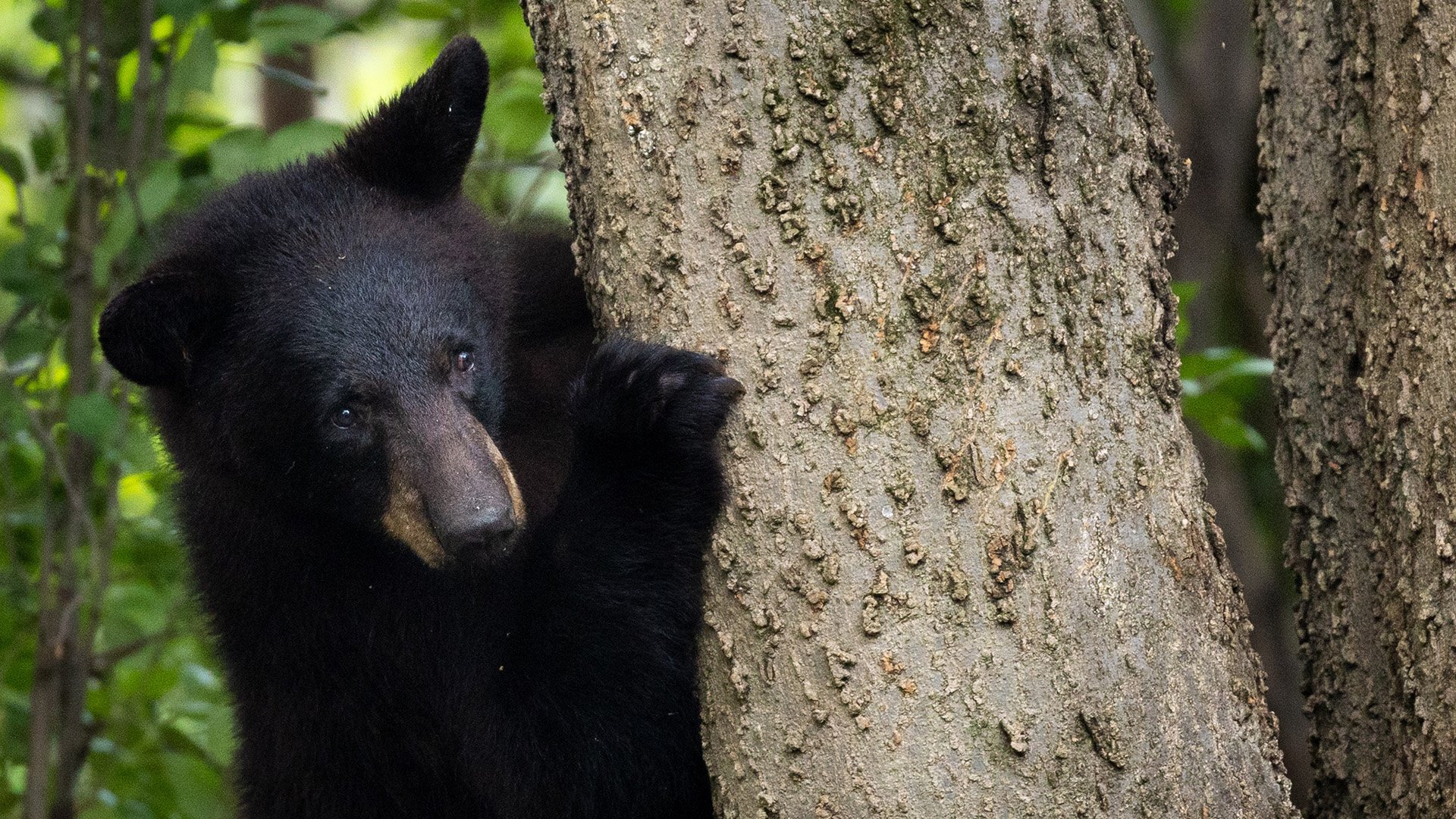
The commissary at Joint Base Elmendorf-Richardson, Alaska, had an unexpected customer over the July 4th weekend when a bear dropped by and began browsing the store’s produce section.
Video of the bear’s visit, captured in a roughly 30-second clip posted to social media, shows the bruin checking out the commissary shelves, munching on a piece of fruit, and then wandering off.
An Air Force official at JBEAR — sorry, JBER — confirmed that the young black bear seen in the video entered the main exchange shopping mall around 9 a.m. on July 5.
“It found its way down the hall into the Commissary where it helped itself to a peach and left the building,” said Maj Carly Costello, director of public affairs for the 673rd Air Base Wing.
The bear entered and left through the store’s automatic sliding doors. The video ends with the bear outside the commissary’s closed doors. There are no people seen in the video, which was first posted to a local Facebook group at the base outside Anchorage, and shared by the popular Amn/NCO/SNCO page.
Top Stories This Week
Former soldier convicted of stealing $1 million worth of MREs
Top medical commander fired at Joint Base Langley-Eustis
The new Marine Scout career field is officially here
The base’s wildlife program manager later determined that the event was “entirely incidental,” and the bear had triggered the building’s automatic doors by “displaying standard, non-confrontational foraging behaviors,” Costello told Task & Purpose.
Large wildlife wandering into buildings via automatic doors is not uncommon in Alaska. In 2023, a moose wandered through automatic doors into the lobby of an Anchorage, Alaska medical building, munching on decorative plants as medical workers in scrubs snapped photos. Security eventually shooed the moose away.
The commissary bear left on its own accord, wandering through the parking lot, Costello said. Conservation Law Enforcement officers who had arrived at the scene then coaxed the errant animal into nearby woods.
The conservation officers on JBER are civilian employees hired by the federal government, she said. Active-duty troops can volunteer to work alongside the civilian officers.
Alaska is home to about 100,000 black bears, who as a species are generally smaller and more prone to excursions into urban areas than the state’s brown and polar bears. Brown bears forage less in human areas. Polar bears, while far more aggressive, live only in the mostly uninhabited northern coastal regions of the state.
“It is not uncommon for residents or visitors to Alaska to see bears, usually from a safe distance,” according to the state’s Fish and Game Department. “But even if you don’t see a bear, you will never be far from one; Alaska is bear country.”
While they are majestic creatures, bears can also pose a danger to humans. Two soldiers with the 11th Airborne Division were injured in April when they were attacked by a bear during a land navigation exercise at Joint Base Elmendorf-Richardson.
Base officials say new, tougher trash cans have reduced bear issues
Bears can become accustomed to encroaching on residential areas and campgrounds when unsecured sources of food are available, Costello said. That can lead to bears losing their fear of humans, creating a public safety threat and, eventually, force authorities to kill the bears.
Over the past year, seven bears have had to be put down because they were deemed to pose a danger to humans, she said.
“Lethally removing an animal is never the first choice, and using non-lethal techniques such as rubber bullets, flashbangs or sirens are preferred to discourage habituating behavior,” Costello told Task & Purpose. “Unfortunately, relocation is not always a solution as bears have a very strong homing instinct and will find their way back, potentially find new neighborhoods, or they may be placed unintentionally into another bear’s territory, potentially leading to territorial disputes that often prove fatal.”
Fortunately, the base has seen a drop in bear incidents since it introduced bear-resistant dumpsters in May that are built with thicker steel construction and feature interlocking lids and spring-loaded locking bars, Costello said.
Authorities on the base have also released a video letting people know how to use the trash receptacles and take other precautions to prevent dangerous encounters with humans and “keep bears wild.”