Empowering remote Navajo veterans
Native Americans have long been reported to serve in the U.S. armed forces at higher rates than most other racial and ethnic groups. Several sources, including the Military Times, report that since 9/11, nearly 19% of Native Americans have served in the military, compared with about 14% of people from all other ethnic groups combined. Yet, for many who return home to the Navajo Nation—a vast territory the size of West Virginia located in the southwestern United States—a secondary battle awaits: a grueling logistical labyrinth to access the federal benefits they rightfully earned.
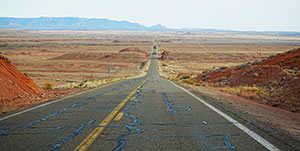
Due to the Navajo Nation’s rural landscape, critical veteran resources are often four to five hours away. For a veteran living in Arizona’s Four Corners region—where the borders of Arizona, Colorado, New Mexico and Utah meet—filing a standard Department of Veterans Affairs claim has historically required an expensive, exhausting overnight journey.
To help reduce these barriers, the DAV Department of Arizona formed a first-of-its-kind partnership that respects tribal sovereignty and empowers local advocates already leading the charge on the ground.
Standing on the front lines of advocacy
The heartbeat of this initiative belongs to the community itself. Seraphine Josley, president of the All-Navajo Veterans Auxiliary and Piñon site coordinator, has long been dedicated to bringing vital resources closer to home.
“On Navajo Nation, our veterans face many challenges of everyday life, including those of families affected by separation and the medical and emotional burdens of military service,” Josley said.
While the local desire to care for veterans has always been strong, funding constraints, limited staffing and a lack of basic amenities in remote homes heavily restricted the infrastructure, according to Josley. Recognizing that true tribal advocacy requires infrastructure, DAV Department of Arizona invested roughly $50,000 to equip the Piñon Veterans Hogan with laptops, tablets and Starlink internet hotspots. (A hogan is a sacred dome-shaped or octagonal building.)
By integrating high-speed tech directly into the Piñon Veterans Wellness Center, DAV provided the tools necessary to turn an exhausting overnight trip into a seamless, local computer call.
“It’s all about getting out of the chapter house, going into the community where the veterans are that can’t come to you,” said DAV Department of Arizona Adjutant Carl Forkner. “If you’re in the Navajo Nation—Piñon or Chinle—you’re five hours away from the nearest service officer.”
Navigating the ‘VA language’
The federal claims process presents a digital and linguistic barrier that often feels like an adversarial trap, according to “The Language of Equity in Digital Health: Prioritizing the Needs of Limited English Proficient Communities in the Patient Portal 2.0,” an article published in the Journal of Health Care for the Poor and Underserved. Traditional VA structures have heavily prioritized health over benefit claims, leaving a significant gap for remote communities where the poverty rate is three times the national average, according to the Department of Agriculture Economic Research Service.
“They don’t speak ‘VA,’” Forkner noted, emphasizing that bureaucratic technicalities routinely lead to unfair denials.
This is where local cultural expertise becomes the ultimate bridge. Many older community members—carrying the physical and emotional weight of aging, severe post-traumatic stress disorder and the effects of exposure to Agent Orange—feel most comfortable communicating in their traditional Navajo language.
Through this remote system, local Navajo volunteers act as vital translators and trusted guides. A veteran can walk into the wellness center, sit down in a familiar environment and connect via Zoom to a DAV service officer. With volunteers translating dense bureaucratic language into the veteran’s native tongue, paperwork is completed accurately and entirely on the veteran’s terms.
A model of sustained trust
A deep respect for the independent status of tribal communities makes this initiative a true partnership.
“What many people don’t realize is that tribes are all sovereign nations,” said DAV National Service Director Scott Hope. “The core of DAV’s effort is building trust to overcome cultural barriers, particularly among Native female veterans and noncombat male veterans who may not see themselves as veterans within their culture.”
Because trust must be earned over time, this isn’t a one-off tech drop. The Piñon site anchors long-term expansion. According to Forkner, future rollouts are planned for Arizona cities Kayenta and Ganado and for the Hopi Nation, with a strategy to scale the model to the Hualapai, Tohono O’odham and Apache reservations through 2029. Ultimately, the goal is to evolve these digital access points into holistic veterans centers featuring sweat lodges, specialized counseling and traditional healing practices.
Josley and the All-Navajo Veterans Auxiliary measure success in the restoration of a sacred promise.
“For many years, our veterans shared the same struggles—resources were too far, help was difficult to access—and many felt forgotten,” Josley said. “Today, we are witnessing a powerful change. Veterans who once felt discouraged are now coming forward again. Hearing a veteran say ‘I feel valued again. I am a veteran, and I fought for our country’ is one of the strongest measures of success we could ever ask for.”
Are you a Native American veteran who would like to share your story of service and sacrifice? Email feedback@dav.org with your basic information and someone will be in touch.