Strengthening emergency care by transforming clinical readiness

VA Texas Valley Coastal Bend Health Care System’s life-saving training recognized with perfect score
When a medical emergency unfolds, seconds matter, and preparation makes the difference in emergency care. At VA Texas Valley Coastal Bend Health Care System (VCB), a quiet but powerful transformation is happening behind the scenes, one that is strengthening clinical readiness and directly improving outcomes for the Veterans who depend on lifesaving care.
This year, that commitment to excellence was recognized nationally. During a recent site visit, the VA Simulation Learning, Evaluation, Assessment, and Research Network (SimLEARN) awarded VCB’s Advanced Cardiovascular Life Support (ACLS) and Basic Life Support (BLS) programs a perfect score: 24 out of 24. But for Program Director David Armor, the achievement is meaningful for one reason above all: “It elevates the safety and care Veterans receive when they need us most.”
Armor leads the facility’s resuscitation education efforts, which include quarterly simulation training and on‑site mock codes conducted at every VCB campus.
“Quarterly simulation training allows staff the proper preparation and skills to perform high‑quality CPR during an actual emergency,” he explained.
The practice is frequent by design. By the time a real event occurs, staff have rehearsed the protocols, the teamwork and the critical decision‑making required to act with precision under pressure.
How repeated practice transforms performance
The impact is measurable.
“We have seen improvements in team response time, documentation, CPR skills,and use of equipment,” Armor said. Faster responses and better technical performance are not merely quality indicators, they are the factors that can determine whether a Veteran survives a code event.
Not all improvements can be captured in metrics, either. Some changes are personal. Armor recalls clinicians who were initially hesitant about moving from biannual to quarterly training. “Later, they came back and told me they were glad they practiced more,” he said. “They had much greater self‑confidence and skills during the actual event.”
Those moments, when practice transforms into readiness, are central to the program’s mission. For Armor, this is what Veteran‑centered care looks like in emergency medicine. “It means providing the right technology and practicing evidence‑based processes with clinical staff to improve emergency care for our Veterans. Our goal is to ensure that when a Veteran needs immediate, lifesaving care, our teams are fully prepared.”
VCB’s innovations are gaining national attention. Armor’s internal, user‑friendly BLS request platform caught the eye of leaders within the Resuscitation Education and Innovation (REdI) program, and they invited him to present his best practice to program directors across the country and consult on improvements to national Microsoft Teams channels. He hopes this momentum inspires broader change.
“I’d like to see the REdI program institute more mandatory national standards across VHA,” he shared. “That way, all clinicians can work toward the same evidence‑based goals from facility to facility.”
While national recognition is meaningful, Armor keeps his focus close to home. If he could share one message with Veterans, he says it would be simple: “Our clinical staff at Valley Coastal Bend are excellent at handling emergencies with Veterans and practice high‑quality lifesaving skills regularly.”
Behind that reassurance is a team that trains relentlessly, not for scores, not for accolades, but for the people who served. And when the moment comes when a Veteran needs help, the preparation happening quietly in VCB’s simulation rooms could be what saves a life.
Related Health stories
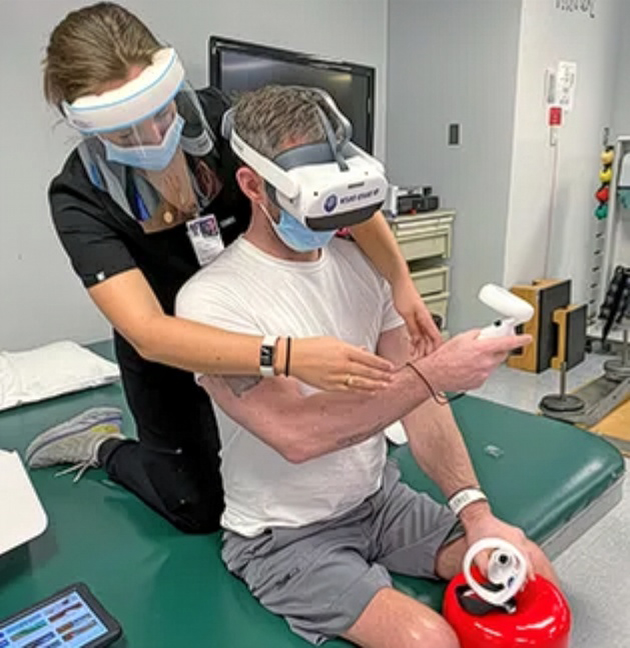
Virtual reality pain treatment expands for veterans
The Department of Veterans Affairs is expanding access to a U.S. Food and Drug Administration-authorized virtual reality (VR) therapy design

Live Whole Health #320: You deserve a break
Do you spend hours jumping between screens, messages and tasks during the day? Over time, this can make your mind tired and your body stiff.

First in VA to receive cutting-edge epilepsy treatment
A groundbreaking laser procedure offers a safer option for epilepsy treatment Back in 1980, when Robert Lindemann decided to enlist in the A