The Marquis de Lafayette’s Paris gravesite is filled with dirt from Massachusetts
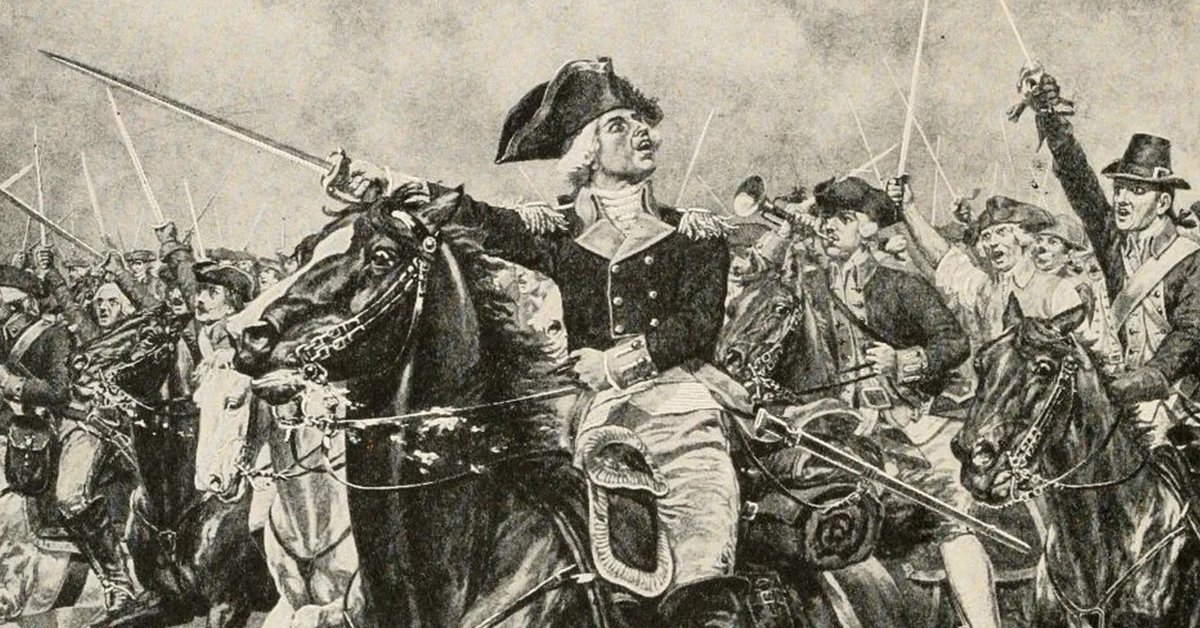
According to the history books, his name is Marie-Joseph Paul Yves Roch Gilbert du Motier, Marquis de La Fayette. In the United States, however, his legend is such that he has transcended a full name. Like Cher, Madonna, the Rock, Prince, Eminem, and Beyoncé, he just doesn’t need all that.
In America, we simply call him “Lafayette.”
When France needed help during World War I, a squadron of American airmen volunteered their skills to fight against the invading Germans. They called themselves the Lafayette Escadrille, and when those American troops finally arrived in France years later, their leaders walked into the tomb of the nobleman and announced, “Lafayette, we are here!”
The relationship between the Marquis de Lafayette and the United States has endured for 250 years because of his admiration and service to a country that was not his own. That admiration runs so deep, that the nobleman is buried in American soil—in Paris.
When Lafayette came to the United States to fight the British in the Revolutionary War, he was so committed to the cause that he volunteered to serve without pay. Unlike other French officers volunteering, Lafayette actually had the military pedigree to be of use. His family’s military roots ran deep: all the way back to fighting alongside Joan of Arc.
His father was a colonel of grenadiers and was killed during the Seven Years War, and the young Marquis became one of King Louis XV’s musketeers while attending college. After college, he became an officer of dragoons and was soon enamored with the American fight for liberty.
By 1775, Lafayette was a captain in Paris and was anxious to join the Americans, to both fight for the cause of freedom and exact revenge on the British for killing his father. He could have avoided the war altogether; he was beyond wealthy, having inherited an astronomical annual salary (more than $1 million in today’s currency), and both his family the government in Paris was against it.
He left anyway, purchasing his own ship (as well as its cargo and a load of weapons) to make the journey. He landed in South Carolina in 1777, made his way to Philadelphia, and soon came to be the right hand man to Gen. George Washington himself.
Although he was well-trained, his pedigree didn’t come with much actual experience in combat. Lafayette would be learning as he served the American cause. Luckily, as a wealthy man, his personal contributions more than made up for what he lacked in military experience. But as he gained that valuable experience, he proved himself an able commander.
A dedicated Enlightenment thinker, his devotion to the cause of American ideals led him to fight in several battles, to be wounded at the battle of Brandywine, and encourage France to recognize American independence. Most crucially, it was Lafayette’s forces that harassed Cornwallis on his way to Yorktown.
This forced the British to move across the James River, where they were eventually trapped by Washington, Lafayette and Comte de Rochambeau by land and the French fleet by sea. He was forced to surrender his army after an almost three-week siege. It was the beginning of the end of the war, and the start of the American experiment.
Lafayette fought in the Continental Army all over the colonies, from New England to the Mid-Atlantic to the South, and was one of the few things that all the new states of the United States had in common. He so loved the ideals of the American Revolution that he tried to export them to France when he returned home.
His advocacy for American liberty would serve him and his wife well in the coming years of the French Revolution. The French admiration for American values literally saved the heads of the nobleman and his wife.
Lafayette would return to the United States many times in the years following the French Revolution. His visits would confirm the idea that the Founding Fathers had created a functioning democracy, based on the egalitarian values of the Enlightenment. He came to love the United States and proclaimed that he wanted to be buried in American soil.
On his final visit to the United States in 1824, Lafayette was the last surviving major general of the Revolution. Although more than 40 years had passed since the birth of the new nation, he still received a hero’s welcome from the American people. He visited all of the then-24 states in the Union, a journey of some 6,000 miles.
While visiting Massachusetts on the trip, he managed to fill a trunk full of earth from the land near Boston’s Bunker Hill and bring it home with him to France. When the “Hero of Two Worlds” died of pneumonia in 1834, his son (aptly named Georges Washington) interred him in the dirt he’d brought back from America. To this day, he rests in both French and American soil.
The American flag has flown over his grave continuously since 1850, even through the Nazi occupation of Paris during World War II. Being a simple site in a private cemetery, hidden behind an innocuous high stone wall, no one ever thought to look there.
Don’t Miss the Best of We Are The Mighty
• Marquis de Lafayette: Washington’s indispensable French commander • The original US Navy was an armada of American rebels and privateers • Daniel Morgan’s Revolutionary War riflemen were America’s original scout snipers
The Marquis de Lafayette’s Paris gravesite is filled with dirt from Massachusetts
World War II
James Bond’s longest-running ‘Q’ survived 5 excruciating years as a POW
World War II
How an American Nazi became the World War II propagandist ‘Lord Haw-Haw’
Celebrate America’s 250th with a real Revolutionary War cocktail
‘The Rise and Fall of an Ancient Superpower’ reveals the true, sometimes surprising history of Sparta