VA Research Wrap Up: New findings on prescribing safety, sexual trauma and dementia

VA’s Office of Research and Development recently published three News Briefs highlighting new findings on an prescribing safety initiative, sexual trauma treatment and dementia.
VA initiative reduces harmful prescription combinations
Antiplatelet medication such as low-dose aspirin is often overprescribed in patients also taking direct oral anticoagulants, increasing the risk of major bleeding. To address this, VA implemented a two-stage initiative involving clinician and patient education alongside an electronic health records tool to promote evidence-based prescribing, followed by an electronic dashboard with flags to alert pharmacists of potentially harmful drug combinations.
VA Ann Arbor researchers and their colleagues compared outcomes for Veterans at seven VA sites, implementing the initiative with Veterans at 128 control sites. The intervention led to a drop in antiplatelet medication from 26.1% to 17.9%, with the greatest benefit seen in patients with stable coronary artery disease. This quality improvement initiative not only lowered the risk of dangerous bleeding in Veterans on blood thinners by reducing unnecessary aspirin use, but could potentially be scaled to reduce other harmful drug combinations as well.
‘Warrior Renew’ helps Veterans with sexual trauma
VA Puget Sound and Portland researchers proved a group treatment that focused on coping with military sexual trauma (MST), called Warrior Renew, was more effective for Veterans with MST-related PTSD than standard care.
Veterans in Warrior Renew participated in eight weekly, virtual, 90-minute sessions while Veterans in standard care attended group therapy sessions that targeted general health and well-being. Those in the MST-focused group had greater score improvements on two PTSD scales at the end of treatment, with self-blame being the area of most improvement, and were the only Veterans to still show clinically meaningful improvements eight weeks later. The results speak to the benefits of tailored medical care, specifically to the needs of Veterans with MST-related PTSD.
Shingles vaccine may lower dementia risk
Providence VA researchers learned that older nursing home residents who received a shingles vaccine had a 24% lower risk of developing dementia.
The study included data on more than 500,000 people aged 66 years or older who were admitted to a skilled nursing facility for either residential or acute care. When adjusted for other factors such as hip fractures and number of wellness visits, the shingles vaccine was still associated with a 12% lower risk of developing dementia in the four years after vaccination. The researchers hypothesized the protection may be due to reduced neuroinflammation and less accumulation of waste proteins and plaques in the brain.
For more Office of Research and Development updates, visit ORD online or go to https://www.research.va.gov/news_briefs/.
Related Health stories
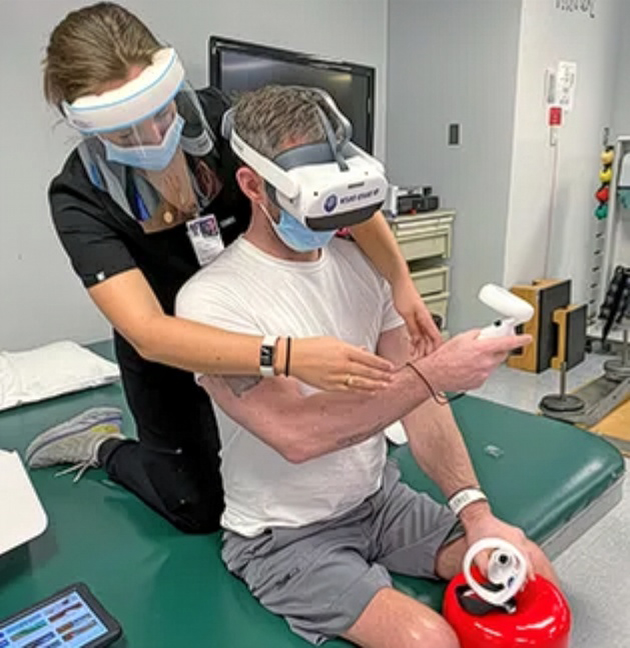
Virtual reality pain treatment expands for veterans
The Department of Veterans Affairs is expanding access to a U.S. Food and Drug Administration-authorized virtual reality (VR) therapy design

Live Whole Health #320: You deserve a break
Do you spend hours jumping between screens, messages and tasks during the day? Over time, this can make your mind tired and your body stiff.

First in VA to receive cutting-edge epilepsy treatment
A groundbreaking laser procedure offers a safer option for epilepsy treatment Back in 1980, when Robert Lindemann decided to enlist in the A