‘Top Gun: Maverick’ actor and Vietnam veteran James Handy killed at 81
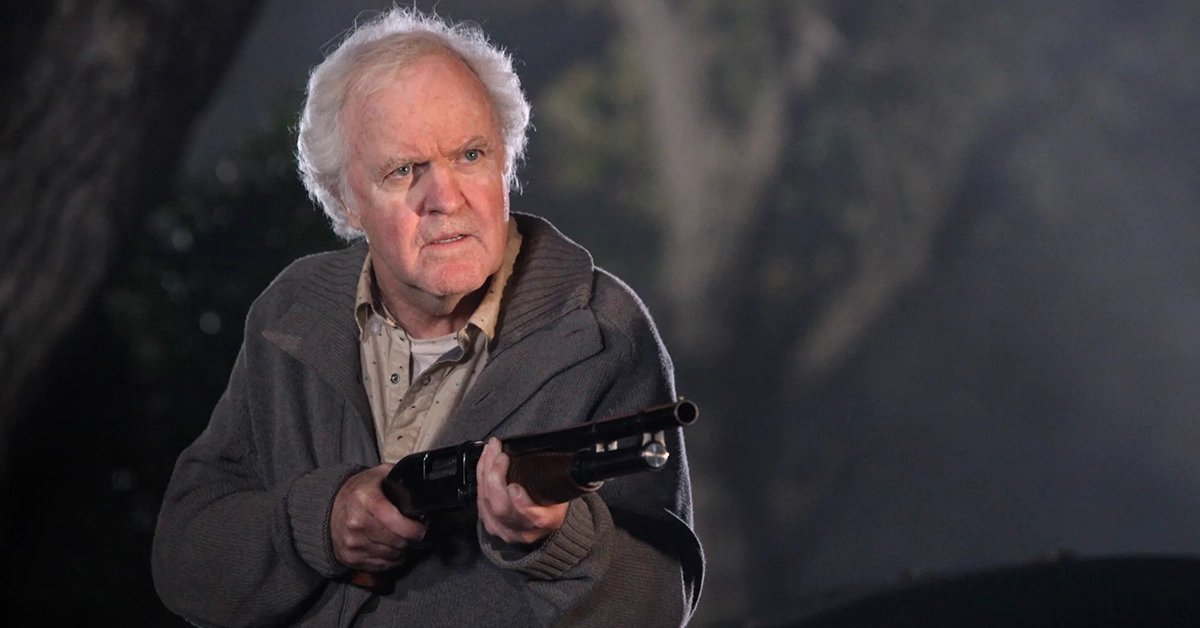
James Handy, a Vietnam War veteran who spent nearly five decades as one of Hollywood’s most reliably present character actors, appearing in more than 140 films and television productions ranging from “Arachnophobia” to “Top Gun: Maverick,” was stabbed to death at his home in the Tarzana neighborhood of Los Angeles on the morning of June 3, 2026. He was 81.
The Los Angeles Police Department said officers from the West Valley Division responded around 9:30 a.m. to a 911 call from a man they say confessed to the killing.
“I am the son of man. I just killed the man of sin,” the caller said.
When officers arrived at the residence on Erwin Street, they found Handy unconscious in the front yard, suffering from a stab wound to the chest. He was transported by paramedics to a local hospital, where he was pronounced dead.
“With great sadness, I can confirm that the gentleman who was attacked and killed on Wednesday in Tarzana was the actor James Handy,” Handy’s talent agent, Pam Ellis-Evenas, said in a statement provided to NBC News.
Michael Gledhill, 44, the son of Handy’s girlfriend, was arrested on suspicion of murder after he flagged down the responding officers and told them he was the person they were looking for.
Gledhill resided at the Erwin Street home with his mother, who the LAPD confirmed was in a relationship with Handy. He was booked at Van Nuys Jail on one count of murder, with bail set at $2 million.
Authorities said the stabbing appeared to be an isolated incident and that there was no further danger to the public. No motive has been publicly disclosed.
A Soldier Before a Star
Before Handy ever stood on a film set, he marched in the jungles of South Vietnam, rifle in hand, trying to stay alive.
Born in New York City in March 1945, Handy discovered an affinity for the stage during his university years, when he was cast in a series of plays and subsequently studied both English and Drama.
His professors urged him to make acting a career. But the arc of his life, like that of hundreds of thousands of young American men in the mid-1960s, was interrupted by the U.S. military’s demand for soldiers in Southeast Asia.
Handy was drafted into the United States Army and served from August 1966 through July 1967—eleven months in-country that would shape the remainder of his life.
He was assigned to the 196th Light Infantry Brigade, a unit that had been activated at Fort Devens, Massachusetts, in September 1965 and was originally slated for deployment to the Dominican Republic before being rushed to Vietnam instead.
The brigade arrived in Vietnam in August 1966 (the same month Handy’s service began) and was posted in the western portion of the III Corps Tactical Zone. The brigade’s base camp was established just west of Tây Ninh, a provincial capital roughly 65 miles northwest of Saigon, in the shadow of Núi Bà Đen, known to American troops as “Black Virgin Mountain.”
Handy fought alongside the 196th in Tây Ninh Province during one of the most consequential and violent periods of the brigade’s Vietnam deployment. Shortly after its arrival, the unit initiated Operation Attleboro in Tây Ninh.
What began as a limited-objective combat training exercise on Sept. 14, 1966, unexpectedly escalated into the largest U.S. military operation of the war to that point, ultimately drawing in some 22,000 Allied troops, including elements of the 1st and 25th Infantry Divisions, the 173rd Airborne Brigade, and multiple Army of the Republic of Vietnam battalions.
The operation, which ended in late November 1966, was characterized by close-quarters jungle fighting, ambushes along overgrown trails, and the discovery of massive Viet Cong supply caches deep in a region that had served as a communist base area since the era of French colonialism. The fighting cost lives on all sides, and two Medals of Honor were awarded to members of the units engaged in the operation’s most intense phase.
The 196th Brigade’s Vietnam record was among the costliest of American units that served in the entire war. Over its entire tour, from July 1966 through June 1972, when it became the last U.S. Army combat brigade to leave South Vietnam, the brigade recorded 1,188 killed and 5,591 wounded, according to the unit’s official history.
Handy served during the first and most intense period of that deployment. In a 2013 interview, he offered a rare and unsparing account of what those eleven months felt like.
“We wound up getting into heavy combat for 27 days we were in the field,” he said. “It was pretty horrific. At first, when you’re over there, you’re in a combat zone, and it doesn’t really register because it doesn’t seem real. You’re 10,000 miles away from home, you’re in this jungle and woods. Parts of the country were beautiful, but at night it got so dark, you couldn’t see your hand in front of your face.”
He described the darkness as something total and disorienting, and the sounds within it as inescapable.
His fellow soldiers were “dropping all over the place, screaming for their mothers” in that blackness, he said.
The Weight That Never Left
Handy returned from Vietnam carrying what many veterans of that war carried: not just memories, but a changed understanding of the country that had sent him. He became a pacifist.
That perspective made him a sharp and sometimes blunt critic of how Hollywood processed the Vietnam War for mass audiences. He was particularly unsparing about “Forrest Gump,” the 1994 Robert Zemeckis film in which the title character, played by Tom Hanks, serves with the 9th Infantry Division in Vietnam.
“I hated ‘Forrest Gump,’” Handy said. “I just hated that movie. I just thought it was so full of crap. His character, Tom Hanks’, would never have survived Vietnam. I tried to explain this to people. They never would have made it through Vietnam with that guy.”
His combat experience was not something Handy spoke about casually, but those who knew him understood it as foundational to who he was. Actor Dan Lauria, best known as the father on “The Wonder Years” and himself a Vietnam veteran, described Handy as a close friend and a fellow traveler through that shared history.
“I got an award for a veteran of the year, and in the speech, I talked about Jimmy, that I wasn’t alone as long as I had friends like him,” Lauria told KNBC in Los Angeles following news of Handy’s death. “Jimmy had a rough time in Vietnam. And he always said if it wasn’t for acting, God knows what would have happened to him.”
Lauria said that upon his return to Los Angeles, he and other veterans planned to hold a ceremony to honor their friend and compatriot.
For Handy, that was not an idle formulation. Acting, by his own account, was what gave shape and purpose to a life that the war had nearly unmoored. He pursued it with a discipline and consistency that became the defining feature of his professional identity for the next half-century.
From the Draft to the Screen
Handy’s first significant film role came in 1981, in the military drama “Taps,” directed by Harold Becker, opposite George C. Scott, Timothy Hutton, and two actors near the very beginning of careers that would define an era: Tom Cruise and Sean Penn.
That same year, he appeared in Sidney Lumet’s acclaimed legal drama “The Verdict” alongside Paul Newman.
The roles that followed were rarely starring roles, but they were steady, varied, and frequently in the company of major talent. Handy appeared in Clint Eastwood’s jazz biography “Bird” in 1988, “Arachnophobia” with Jeff Daniels in 1990, and with Robin Williams in 1996’s “Jumanji.” He had a role in M. Night Shyamalan’s 2000 thriller “Unbreakable” and, in 2017, played a doctor in James Mangold’s Wolverine film “Logan,” starring Hugh Jackman.
On television, Handy became an almost omnipresent supporting face across four decades of network and cable drama. His credits included “NYPD Blue,” “Law & Order,” “The X-Files,” “The West Wing,” “Castle,” “NCIS: Los Angeles,” and “Criminal Minds,” among many others.
James Handy’s final screen role was also, by box office measures, his most visible. In 2022’s “Top Gun: Maverick,” Handy played Jimmy the bartender. The film grossed more than $1.5 billion worldwide, making it one of the highest-grossing films in cinema history.
“I could not have asked for a more talented, humble, or gracious client and friend than James Handy,” his agent, Ellis-Evenas, said.
The LAPD said Thursday that its investigation into Handy’s death is ongoing.
Don’t Miss the Best of We Are The Mighty
• The best in military entertainment from 2025 (and what sucked) • The bizarre James Bond hoax that has Hollywood scratching its head • ‘Independence Day:’ Why the ’90s blockbuster still gets our patriotic blood pumping
Stormin’ Norman Schwarzkopf’s Beretta M9 from Desert Storm is going up for auction
‘Jimmy’ trailer: The Oscars, World War II, and a wonderful life
How Ronald Reagan healed scars from Vietnam on Memorial Day in 1984
History Channel doc revisits boxing’s most politically charged rivalry
Kurt Vonnegut’s ‘Slaughterhouse-Five’ comes to life in a new Tralfamadore exhibit
Related Legacy stories
This American flag survived D-Day, then was returned to the US 75 years later
When Howard Vander Beek died in 2014 at the age of 97, he left behind a distinct reminder of his World War II service. Vander Beek, a lieute
Medal of Honor recipient and legendary Vietnam War helicopter pilot ‘Old Snake’ has died
Retired Army Col. Bruce Perry Crandall, the legendary helicopter pilot who was awarded the U.S. military’s highest decoration for valor for
Air Force crew honors WWII-era Flying Tigers with A-10 paint job
It started as a routine transfer. Following an asset transfer from Korea, maintainers at Moody Air Force Base, Georgia, accepted and process