Some military forces call autism a disqualifier. The IDF calls it an advantage.
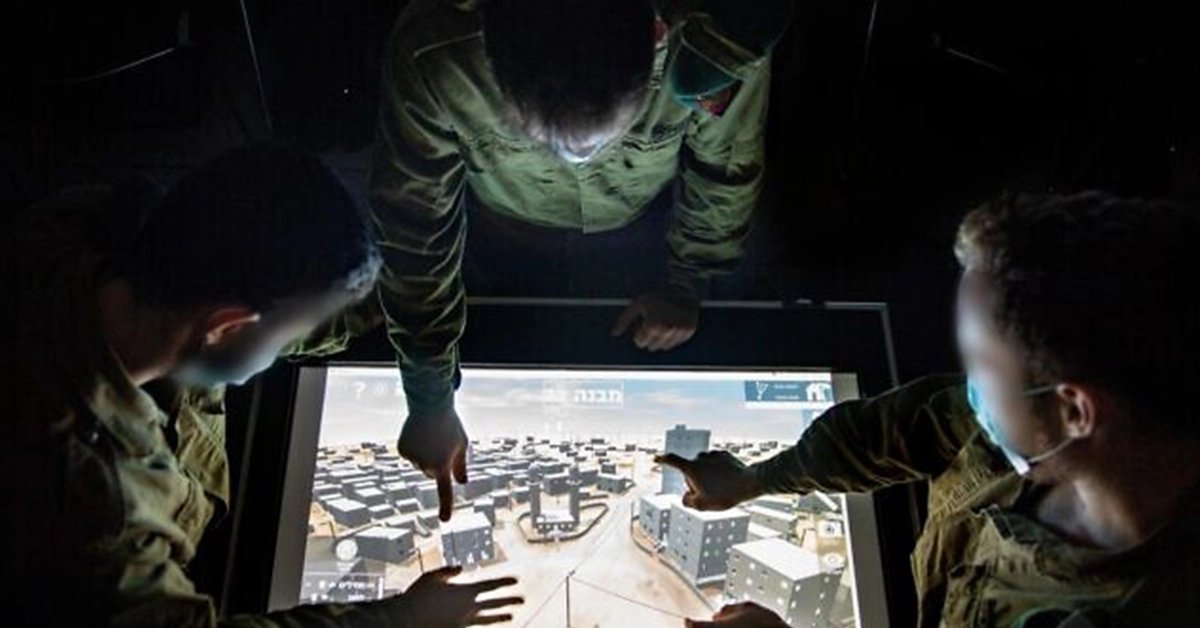
Somewhere inside an Israeli military intelligence facility, an autistic corporal is eight hours into his shift, scanning satellite imagery on multiple monitors. He does not find this tedious or boring; it’s actually quite relaxing.
When the IDF’s chief of staff visited and stopped by this soldier’s desk, the young man proudly pointed to something he’d found in an aerial photograph. The general leaned in close, but he saw nothing. The soldier pointed it out again. “There, it’s so clear,” he said.
It was clear to him, and that right there is the whole point.
Across the world’s most advanced militaries, a quiet but significant reckoning is underway. Cognitive traits long associated with autism, such as sustained attention, pattern recognition, tolerance for repetitive precision tasks, and an ability to detect anomalies that neurotypical analysts scan right past, turn out to be exactly what modern intelligence, cyber, and geospatial operations need.
One problem is that most armed forces still classify autism as a disqualifying medical condition, effectively screening out the very minds they might end up needing most in future conflict.
Israel solved this contradiction over a decade ago. The rest of the world is still working out the kinks.
In 2013, two Mossad veterans launched a program called Ro’im Rachok, which is Hebrew for “Seeing Far.” One of them, a physicist named Leora Sali, had an autistic son while spending years on the technology side of Israeli intelligence.
She understood, probably better than anyone in the building, where the operational needs of the IDF and the cognitive strengths of autistic individuals started to overlap. The other vet, Tal Vardi, had the connections needed to make something happen. This was not done out of loyalty or out of pity; they hypothesized that autistic visual perception wasn’t impaired; it was just different and, in certain roles, operationally superior.
Testing began inside Unit 9900, the IDF’s visual intelligence division, which specializes in analyzing satellite and aerial imagery. Results did not require much interpretation. One group of autistic analysts completed an intelligence analysis in three months that had been projected to take eighteen. Yup.
During combat operations, their speed and precision proved critical. One unit commander said that the gap between the volume of incoming intelligence and the military’s capacity to process it was widening, and that these soldiers were closing it.
Over 400 soldiers now serve through the “Spectrum of Talent,” deployed across roles that include satellite imagery interpretation, software quality assurance, data classification, electronics, and electro-optics.
Their training pipeline consists of a six-month course in which IDF commanders teach alongside occupational therapists and speech pathologists. This was ingenious in helping bridge the gap between the rigors of military life and the specific support autistic recruits need to succeed.
A 2024 study published in Frontiers in Psychology evaluated 49 participants across the program’s three profession tracks, Visual, Digital, and Technical; they found significant improvements in adaptive behavior, social communication, and emotional empathy.
The program is designed to produce much more than junior analysts. It’s set up to produce soldiers who leave service better equipped for civilian life, particularly in Israel’s tech sector, where companies like Intel and eBay were among the first to hire from this pipeline.
Israel’s model is centered on role-specific integration, which matches recruits’ cognitive profiles to the military’s operational needs so precisely that most corporate diversity programs would do well to take note.
Why does it work? Because it treats autistic cognition as a skill rather than a hindrance.
Setting the Stage
The United States, as it tends to do with good ideas that originate elsewhere, is arriving late, but it brought dessert.
As of April 2026, Autism Spectrum Disorder remains a formally disqualifying condition for military service under DoD Instruction 6130.03; nothing changes here. However, did you know that over 500 applicants were granted medical waivers?
Meanwhile, the National Geospatial-Intelligence Agency has launched a workforce pilot directly inspired by Ro’im Rachok.
The NGA is redesigning how it trains, supervises, and physically arranges workspaces for neurodivergent analysts, adjusting training protocols to favor visual and systematic instruction; thus, equipping managers with neurodivergence-informed communication strategies, and allowing self-selected desk arrangements with noise-canceling tools to manage sensory overload.
They have even piloted a modified security clearance process, recognizing that the standard polygraph interview can be uniquely punishing for autistic candidates.
Over at the Space Force, the Cyber Halo Innovation Research Program, CHIRP, is building a college-to-career pipeline for cybersecurity students, pairing them with mentors from Space Systems Command and Pacific Northwest National Laboratory. The program is not autism-specific, but its emphasis on structured mentorship and what it calls “professional survival skills”, translating technical brilliance into a language military hierarchies understand, is built for exactly the kind of candidate who excels at the work but struggles with the culture.
Here’s the structural contradiction a career counselor won’t mention: diagnosis excludes, but capability is already in use.
Neurodivergent individuals already work across intelligence analysis, engineering, cybersecurity, and security clearance investigations throughout the Department of Defense. Some were even diagnosed after entry. Some never disclosed at all.
It would appear that this system formally bars the door while quietly benefiting from those who slip through it.
The United Kingdom is making headway in the right direction, but has not quite arrived anywhere meaningful yet. A UK Ministry of Defense freedom-of-information response recorded over 400 serving personnel with an autism-related medical code as of February 2023, and the real number is almost certainly higher.
The British Army has scrapped more than 100 outdated medical policies and now evaluates autism on a case-by-case basis rather than disqualifying outright. A defense minister told Parliament the government was “actively considering” recruiting autistic people specifically for cyber roles.
A new Gap Year Foundation Scheme for under-25s, launching in 2026 and modeled after Australia’s program, lets these young people test military service for one year with no longer commitment required. Allowing for a low-risk entry option, designed for neurodivergent candidates who need to know whether the environment will work before signing away years of their lives, has an added benefit: it allows recruits’ families to breathe a bit easier.
Australia, for its part, launched the Dandelion Program through its Defense Organization to recruit autistic cyber analysts, addressing a talent shortage that the conventional hiring pipeline could not fill. The Australian Defense Force’s Gap Year program, the template for the UK’s new scheme, offers 12-month paid placements and has reportedly retained half its participants into longer service.
In Canada, a Royal Canadian Air Force officer published a formal paper through the Canadian Forces College arguing that the military should actively recruit neurodivergent people, citing both the Israeli model and the civilian organization Specialisterne.
Finland quietly shifted policy in the 2010s, making autistic citizens subject to conscription rather than automatically exempt.
None of these countries has built anything close to what Israel has. But they are all, in their own institutional languages, saying the same thing: we need to stop treating this as a medical anomaly and start treating it as recruiting talent.
There is a human price being paid in the space between where policy is and where it needs to be. An Australian soldier named Nick Korfias served 20 years before being diagnosed with autism and ADHD at the age of 37.
For 20 years, he couldn’t understand why he approached problems differently, why he thrived under concise instructions and precision tasks, but why he would burn out in unstructured social environments.
Now, he advocates openly for neurodivergent service members, writing that the next step is cultural: leaders must understand the strengths these soldiers bring instead of pushing them to their breaking point.
His story raises the question that sits at the center of this entire conversation, and it’s one your chain of command probably hasn’t discussed: is this inclusion, or is it instrumentalization?
Israel’s strategy works because they treat autistic cognition as an asset. They take the time to build support, hire therapists, tailor training, and utilize adjustable service terms that allow these soldiers to grow as people, not just as analysts.
The weakest approaches do neither: they maintain the formal exclusion while quietly relying on undisclosed neurodivergent personnel who receive no support at all.
A soldier in Israel’s Unit 9900 saw what the chief of staff could not. That is not a metaphor for inspiration. The question becomes not whether different minds belong in the military, but how long militaries can afford to pretend they don’t.
Until the next drop, stand easy.
Don’t Miss the Best of We Are The Mighty
• SMASH2000: Finally, an AI-powered optic that turns your AR-15 into a drone hunter • The God-Switch: What Elon Musk’s Starlink can actually be used for • The US Army’s ‘Cattle Truck’ was the worst ride you’ll never forget
Join the Military
The complete guide to West Point
Everything you need to know about military ranks and what they mean
The 7 best enlisted military jobs to get after being drafted for World War III
6 dumb things I thought I knew about the military before joining