The forgotten Civil War legacy of America’s most notorious prison
When I teach the Civil War, I frequently encounter surprised faces when students learn that California, so far from the eastern battlefields of Gettysburg and Antietam, played a critical, strategic role in safeguarding the Union.
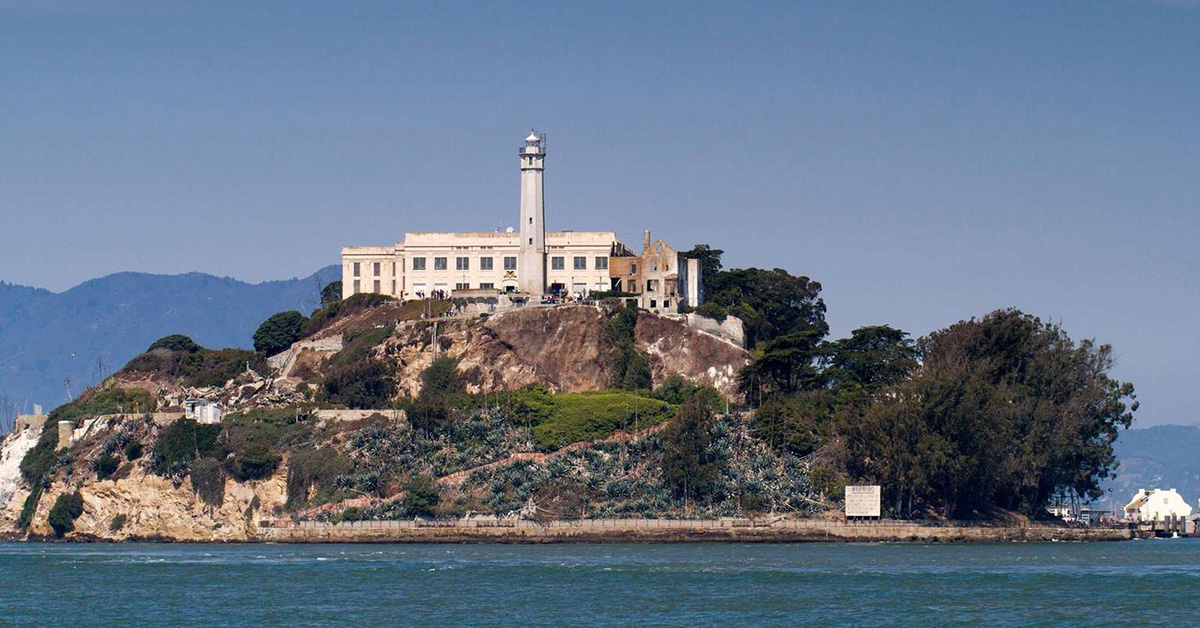
Central to that story is Alcatraz Island in San Francisco Bay, a place synonymous with isolation, security, and notoriety.
Long before the infamous prison captured the public imagination, Alcatraz stood guard over the Pacific Coast during one of the most tumultuous eras in American history. Its story, stretching from military stronghold to federal penitentiary, mirrors the evolution of the nation itself.
The Birth of Fort Alcatraz
The origins of Alcatraz Island as a defensive position trace back to the immediate aftermath of the Mexican-American War. The war expanded the United States’ western territories, and San Francisco quickly emerged as a vital port following the California Gold Rush.
Recognizing the strategic value of controlling access to this rapidly growing city and its harbor, President Millard Fillmore designated Alcatraz as a military reservation in 1850. Construction of a fortified masonry installation began in 1853, and by 1854, the fort was operational.
Designed to withstand both naval bombardment and land-based assault, the fort’s thick granite walls, reinforced gun batteries, and elevated positions made it one of the most formidable defensive structures on the West Coast.
Alcatraz did not exist in isolation. It formed part of a strategic network known as the “Triangle of Defense,” in conjunction with Fort Point and Lime Point. This network created overlapping fields of fire to protect the entrance to San Francisco Bay, making it nearly impossible for enemy vessels to approach undetected or unchallenged.
The island’s rocky cliffs and treacherous surrounding waters deterred would-be attackers, and any assault met formidable resistance due to the man-made fortifications.
By the early 1860s, Alcatraz boasted an impressive arsenal of 111 cannons, mounted in batteries strategically positioned around the island. Masonry towers housed smaller howitzers, enabling defenders to cover blind spots and repel attacks from any direction.
The construction of Fort Alcatraz represented a clear statement of American resolve and federal authority. Its location, isolation, and firepower reflected a military philosophy that valued deterrence and control.
Alcatraz and the Civil War
With the outbreak of the Civil War, the role of Alcatraz shifted dramatically. California, though a Union state, was politically divided with pockets of Confederate sympathizers and secessionist sentiment.
The federal government recognized the need to secure this far-flung territory and prevent it against disloyal activity. Alcatraz became a key instrument of that strategy, serving both as a defensive stronghold and as a prison for Confederate sympathizers, prisoners of war, and individuals accused of treason.
At that time, Alcatraz was the only fully completed fortification in San Francisco Bay, giving it a unique strategic importance. Its cannons and fortified positions made it the linchpin of the Triangle of Defense, capable of preventing enemy ships from entering the harbor while simultaneously supporting nearby forts.
The placement of artillery was meticulously calculated to cover the entire bay entrance. During this period, the island was a hub of military activity, with officers, soldiers, and engineers working to maintain and improve its defensive capabilities.
In addition to its combat readiness, Alcatraz began to assume a correctional role. The number of prisoners on the island increased steadily, prompting the development of secure housing and guard facilities.
By the end of the Civil War, Alcatraz was recognized not just as a fortification but as a reliable detention site for those considered threats to national security.
Alcatraz the Military Prison
The post-Civil War era saw Alcatraz’s transition from a purely defensive fort to long-term military prison. The fort’s isolation and robust infrastructure made it ideal for holding dangerous individuals. Over the next few decades, the prison facilities were expanded and modernized.
In 1907, Alcatraz received an official designation as the Pacific Branch of the U.S. Military Prison system, formalizing its role as a secure facility for military offenders, federal prisoners, and other individuals deemed a risk to order.
The fortifications were continually updated to keep pace with advances in artillery and military engineering. Rifled cannons replaced older smoothbore guns, enhancing accuracy and range. Underwater mines were installed around the island to supplement the artillery defenses, ensuring that Alcatraz remained an unassailable stronghold.
The buildings were reinforced and expanded to house larger numbers of prisoners, with careful attention to security, sanitation, and functionality.
By the early 20th century, Alcatraz evolved into a hybrid facility: part military fortress, part prison. Its unique combination of isolation, firepower, and fortified architecture made it one of the most secure locations in the nation.
Yet even as the military mission waned, the island’s reputation as a detention site continued to grow.
Alcatraz the Federal Prison
The major transformation of Alcatraz into a federal prison began in 1933, when the U.S. Army relinquished control and transferred the island to the Department of Justice. The federal government sought a maximum-security facility capable of housing the most dangerous and unmanageable criminals in the nation, and Alcatraz fit the bill perfectly.
The prison officially opened on July 1, 1934.
The model at Alcatraz emphasized isolation, strict discipline, and minimal privileges. Prisoners were confined in cells designed to reduce contact and limit opportunities for rebellion or escape. Guard towers, reinforced walls, and secure gates ensured that the facility could operate efficiently while containing individuals who had proven difficult to manage in conventional prisons.
The combination of physical isolation and rigorous oversight quickly established Alcatraz’s reputation as the toughest prison in the country.
Infamous Inmates of Alcatraz
Throughout its operation, Alcatraz housed some of America’s most notorious criminals. Al Capone arrived in 1934 after his conviction of tax evasion. Capone’s notoriety and larger-than-life personality brought national attention to the prison, and his presence became part of Alcatraz’s enduring legend.
Another infamous inmate, George “Machine Gun” Kelly, committed audacious crimes during Prohibition, including kidnappings and armed robberies. Kelly’s time at Alcatraz cemented the prison’s reputation for housing individuals who challenged the law with impunity.
Other notable inmates included Robert “Birdman” Stroud, whose extraordinary study of birds made him a figure of public fascination.
Alvin “Creepy” Karpis, a Depression-era gangster and member of the Barker-Karpis gang, became Alcatraz’s longest-serving inmate. Each of these men, along with countless others, contributed to the mythology of Alcatraz. They reinforced the perception of the island as a place where only the most dangerous could be held securely.
The strict daily routines, harsh discipline, and isolated cells created an environment that few could endure, and the prison’s reputation for inescapability became legendary. Escape attempts, though rare, captured the public imagination and contributed to a narrative of intrigue, danger, and federal authority.
Inmates endured rigorous control, from limited recreation to strict work assignments, and the prison’s architecture made escape nearly impossible.
Over time, Alcatraz became a symbol of both punishment and the federal government’s determination to maintain law and order during a period of social upheaval.
The Infamous Alcatraz Escape
Among all the stories that emerged from Alcatraz, none captures the imagination quite like the June 1962 escape by Frank Morris and brothers John and Clarence Anglin.
The prison’s location on a rocky island surrounded by frigid waters, coupled with its heavily fortified cells and 24-hour guard surveillance, made even the idea of escape seem impossible. Yet these three men meticulously planned a breakout that became one of the most legendary prison stories in American history.
The planning phase of the escape was extensive and required extraordinary patience and ingenuity. Morris, known for his intelligence and careful observation, studied the prison’s routines, noting the guards’ schedules, meal times, and the placement of surveillance cameras.
The Anglin brothers, both resourceful and mechanically skilled, collaborated to create tools and methods for bypassing security measures that normally were impossible to overcome.
Over months, the trio worked quietly within their cells, using improvised tools fashioned from spoons, a sharpened electric drill motor, and other items smuggled or scavenged from the prison workshops.
They carefully removed the concrete around the air vents of their cells, a painstaking process that required precision to avoid detection.
Beyond breaching their cells, the escapees needed to overcome the island itself. They constructed a makeshift raft and life vests from more than 50 raincoats, which they waterproofed using heat and adhesive techniques they devised in secret.
Their plan required them to descend from the high cellblock to the roof, scale the exterior walls, and navigate to the shoreline under the cover of darkness. Every step demanded stealth, patience, and ingenuity. The escapees even created realistic dummy heads from a mixture of soap, toilet paper, and hair collected from the prison barber shop to place in their beds.
These decoys gave the illusion that they were sleeping, buying crucial hours before morning counts revealed their absence.
On the night of June 11, 1962, Morris and the Anglin brothers executed their plan. They quietly exited the cellblock, navigated the roof, and made their way down to the water. Despite the frigid currents of San Francisco Bay and the treacherous rocks along the shore, they launched their makeshift raft.
When the morning count revealed the empty beds, the alarms sounded, initiating a massive search. Guards combed the island, boats scoured the waters, and helicopters joined the hunt. They never conclusively found the escapees, though. The mystery surrounding their fate has persisted for decades.
Some evidence suggested they may have drowned in the cold, choppy waters. Others speculate that the three men successfully disappeared, blending into society and leaving the island’s legend permanently intact.
The escape had profound implications for Alcatraz and for the federal prison system as a whole. It highlighted both the ingenuity of determined prisoners and the limitations of even the most secure facilities.
The incident prompted a reassessment of security procedures. It reinforced Alcatraz as a place of punishment and myth, and cemented the prison’s place in popular culture.
Books, documentaries, and films have repeatedly revisited the escape. Each retelling emphasized the remarkable combination of intelligence, creativity, and courage required to challenge a prison once deemed inescapable.
Despite its formidable reputation, Alcatraz’s era as a federal prison was relatively brief. By the early 1960s, the costs of maintaining the facility had become prohibitive. Its isolation, once an asset, created logistical challenges, including the transportation of food, supplies, and personnel.
The buildings themselves, many constructed decades earlier, were deteriorating under constant exposure to the harsh marine environment. The prison officially closed in 1963, transferring inmates to other federal facilities.
Even after its closure, Alcatraz continued to capture the public imagination. Tours, books, and films highlighted its history, blending accounts of notorious criminals with the island’s earlier military past.
The narrative of Alcatraz evolved to encompass its strategic role during the Civil War and its later significance as a symbol of federal authority and criminal justice in America.
Preservation and Rediscovery
Alcatraz’s historical importance has not diminished with time. In 2023, a groundbreaking project sought to create a highly precise 3D digital twin of the island. Over 13 months, drones and robotic systems mapped every corner of Alcatraz, providing a comprehensive digital record to combat threats from rising sea levels and erosion.
The project went beyond simple documentation. Climate change increasingly threatens coastal infrastructure, and the LiDAR map provides a critical baseline for monitoring structural degradation and planning conservation efforts.
It revealed previously inaccessible areas (including a Civil War-era dungeon), offering new insights into the fort’s military and prison history. Dangerous and unstable locations, such as the sewer system and the power plant smokestack, were safely scanned without human entry. That allowed experts to evaluate hazards and plan interventions.
VCTO Labs, in partnership with the National Park Service, carried out the effort. They preserved Alcatraz’s layered history from Civil War fortress to federal supermax prison in extraordinary detail. The project, described as a “Mona Lisa” of historical documentation, highlights the ways modern technology can illuminate the past, safeguarding it for future generations.
For students and the general public alike, Alcatraz provides a powerful lesson. Some of the most meaningful stories hide in plain sight, in places that are remote or insignificant at first glance.
Don’t Miss the Best of We Are The Mighty
• 12 strange and surprising facts about the Civil War • How a steamboat carrying Union soldiers became ‘America’s Titanic’ • The iconic Colt Detective Special was America’s concealed carry of choice from World War II to Vietnam
The forgotten Civil War legacy of America’s most notorious prison
By Daniel Tobias Flint
Mighty MilSpouse
A Gold Star spouse’s healing journey amid unimaginable grief
By Sara Jane Ginn
Mighty MilSpouse
Reports show a military spouse commits suicide every 8 days
By Sara Jane Ginn
The Artemis II crew made an 80s sitcom video as they flew to the moon
Medal of Honor
Audie Murphy’s Medal of Honor action is still like something out of a movie
Blake Stilwell, Military.com