Ukraine is using a World War I ‘creeping barrage’ tactic to turn the tide of the war
The first casualty of war is always the plan—something the Russian Army relearned the hard way when it invaded Ukraine in 2022. Kyiv was supposed to fall in a matter of days. When the shock of Russia’s initial assault subsided, however, the two opposing armies became entrenched in a virtual stalemate. This stalemate has remained more or less unchanged ever since.
World War I devolved in much the same way. The German plan for the war was supposed to take all of six weeks. What began as a quick thrust through Belgium toward Paris quickly became the infamous deadlock of trench warfare we all remember about World War I. To break the impasse, both sides began using artillery with waves of infantry to overwhelm the enemy trenches.
Today, Ukraine is borrowing from the World War I playbook, but with a modern twist: drones. And it’s proving to be much more successful than the Allied armies of the First World War ever thought possible.
The concept of a “creeping barrage” actually predates World War I. British forces used it during the Second Boer War in South Africa, as the Boers used fortified positions and long-range rifles to keep the advancing Brits at bay. It was perfected in World War I. Trench warfare made any kind of infantry advance next to impossible, but staying put was not an option either.
In a normal infantry assault, each side began its race across No Man’s Land with masses of artillery fire, hoping to reach the enemy trench before they could mount any kind of defense. In most cases, the incoming troops could not close the distance in time. The Creeping Barrage changed everything.
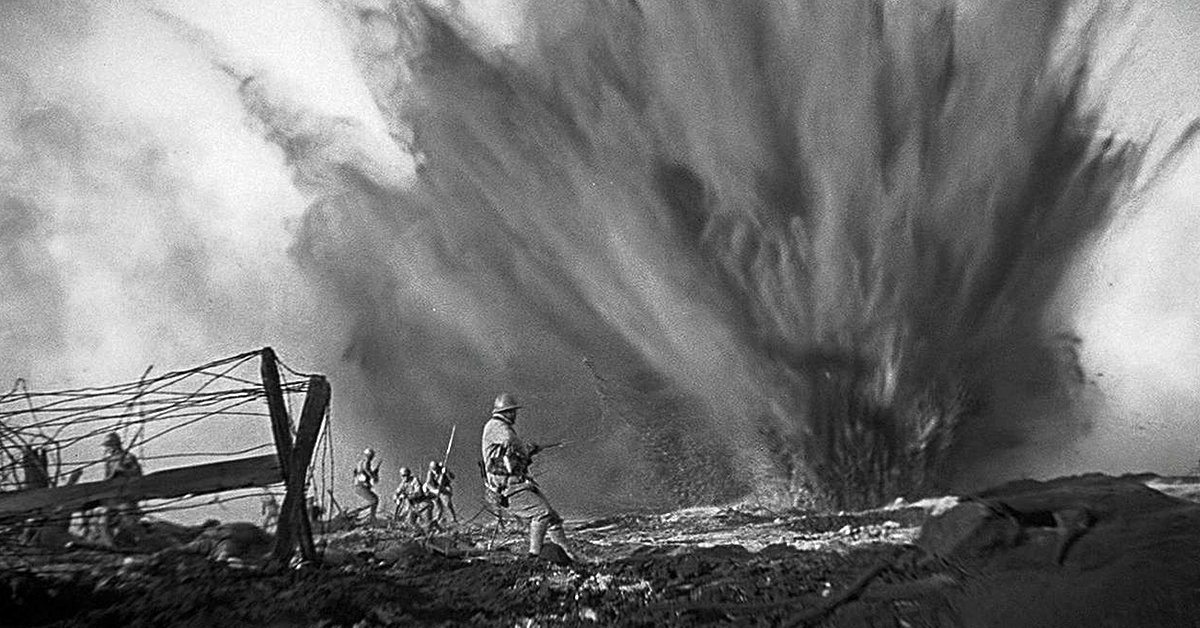
It began close to friendly lines: shells from incoming artillery would kick up the dirt, mud, or dust to obscure the enemy’s view of an oncoming attack. The artillery would slowly creep forward as the ground troops marched toward their targets. Explosions would rock the enemy’s position, forcing them to either man their guns as the trenches (and their comrades) blew up around them, or seek shelter in a fortified bunker.
The idea was that by the time the incoming infantry arrived, the barrage would be creeping toward the next line of defenses, and the enemy would not yet be ready for an attack, and the trench would be cleared. Of course, the maneuver had to be perfectly timed to both avoid killing friendly troops and for the attackers to arrive before they could be killed by the enemy.
Timing was seldom perfect.
Today, Ukraine has adopted a similar tactic. According to Russian soldiers, Ukrainian forces in the Zaporizhzhia region have reclaimed 400 square kilometers of their territory from the Russian Army by massing hundreds of drones at a depth of 20 kilometers along a narrow front. After a calculated drone “barrage,” Ukrainian troops move in to clear out whatever might be left. Drone operators then advance behind them to repeat the process.
Unlike the artillery barrages of World War I, the danger to the advancing infantry in Ukraine is minimal. Fragmentation from artillery shells doesn’t necessarily fly in only the desired direction; it goes everywhere. If the advancing force is too close, they’ll be hit by friendly shrapnel. Drones can actually see the area and their targets and can conduct a “creeping” movement with few friendly-fire incidents.
The tactic is working. In the first three months of 2026, Ukraine has cut the rate of Russian advance in half. In February, Ukraine gained more territory than it lost for the first time in two years.
“Our drone strikes alone resulted in 33,988 Russian servicemembers killed or seriously wounded, while artillery and other strikes eliminated another 1,363 Russian occupiers,” Ukrainian President Volodymyr Zelensky posted on Apr. 3. “That means more than 35,000 Russian losses in just one month – and these are clearly verified losses. We have video documentation of every such strike in our system.”
Don’t Miss the Best of We Are The Mighty
• Ukraine’s new, drone-delivered weapon is basically a phallic claymore • Why Ukraine and Russia still need infantry (and so do we) • A Russian fighting for Ukraine conned the Kremlin out of $500,000
Ukraine is using a World War I ‘creeping barrage’ tactic to turn the tide of the war
Your standard rifle can now be an anti-drone weapon. Seriously.
A Russian game studio is making a ‘propaganda’ game about its worst modern failure
The God-Switch: What Elon Musk’s Starlink can actually be used for
Ukraine turned war into a point-based game with a real-world rewards market