What we know about the US military’s blockade of Iran
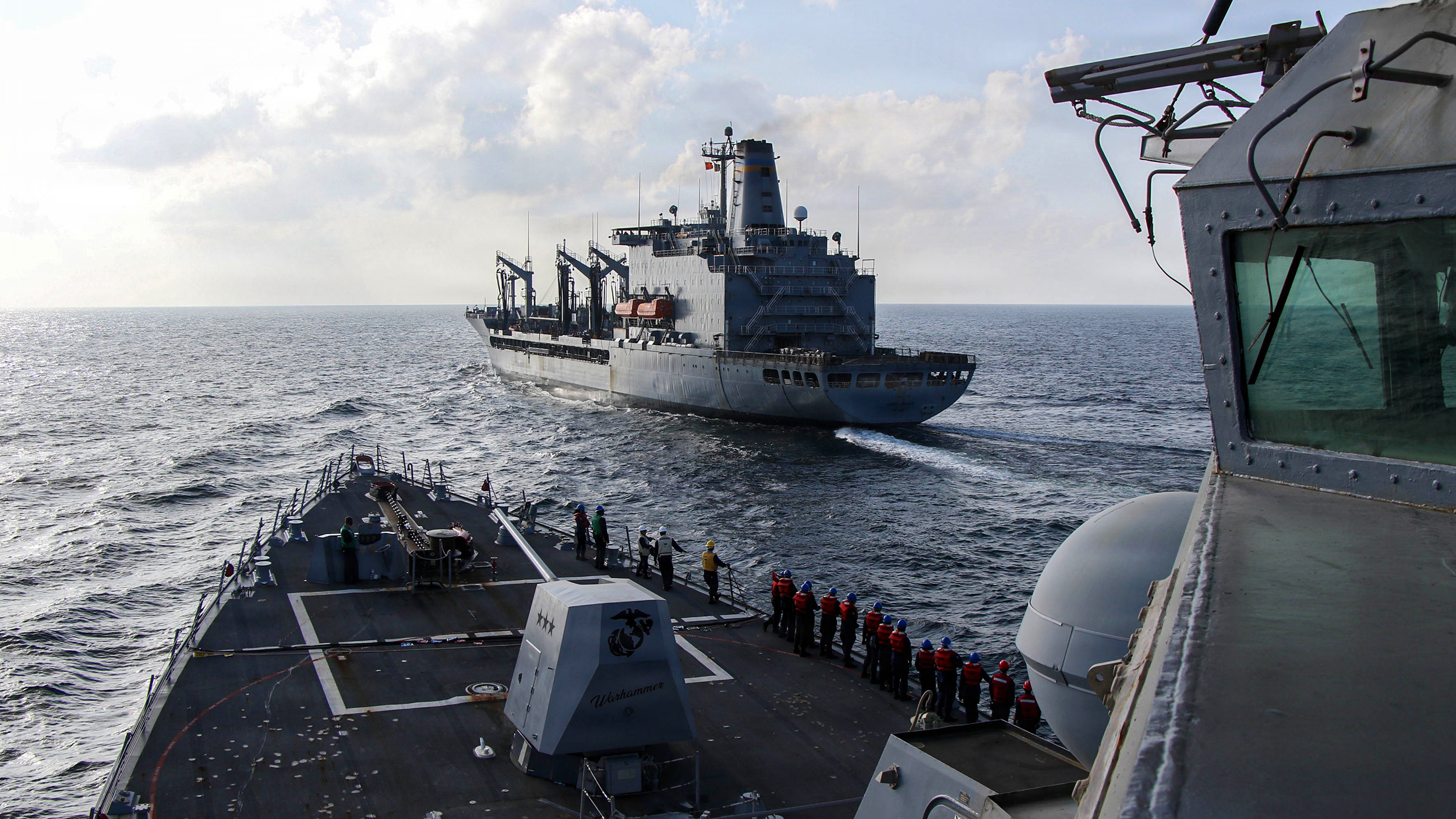
The U.S. military has announced it will impose a blockade on all ships entering and leaving Iranian ports. The move comes after President Donald Trump accused Iran of breaking its promise to reopen the Strait of Hormuz.
The blockade was scheduled to begin at 10 a.m. on Monday, according to U.S. Central Command, or CENTCOM.
“The blockade will be enforced impartially against vessels of all nations entering or departing Iranian ports and coastal areas, including all Iranian ports on the Arabian Gulf and Gulf of Oman,” Central Command announced in a Sunday news release. “CENTCOM forces will not impede freedom of navigation for vessels transiting the Strait of Hormuz to and from non-Iranian ports.”
The combatant command did not specify how the U.S. military would enforce the blockade, nor did it include how many U.S. ships, aircraft, and service members would be involved in the effort.
Top Stories This Week
Army lets soldiers deployed for Operation Epic Fury reenlist two years early
Air Force offers up to $50,000 annual bonuses to keep aviators in the service
A boom operator on an Air Force tanker earned two DFCs for combat flights
By Nicholas Slayton, Matt White
While there are no specifics on which vessels will participate in a blockade of the crucial waterway, or to what degree, the U.S. maintains a significant naval presence in the region. So far, the aircraft carriers USS Gerald R. Ford and Abraham Lincoln, along with their strike groups, have taken part in operations against Iran, and the Tripoli Amphibious Ready Group, with about 2,200 Marines from the 31st Marine Expeditionary Unit, arrived in the region late last month. The aircraft carrier USS George H.W. Bush and its strike group, along with the Boxer Amphibious Ready Group, have also been ordered to support operations in the Middle East.
Trump warned Iran on Monday not to use any of its “fast attack ships” to interfere with the blockade.
“If any of these ships come anywhere close to our BLOCKADE, they will be immediately ELIMINATED, using the same system of kill that we use against the drug dealers on boats at Sea,” Trump wrote on Truth Social.
Trump announced the blockade on Sunday, posting on social media that the U.S. military would also interdict any ships that paid the Iranians for safe passage and destroy any sea mines the Iranians have laid in the Strait of Hormuz. He also wrote that “Any Iranian who fires at us, or at peaceful vessels, will be BLOWN TO HELL!”
The blockade comes as the United States and Iran remain at loggerheads about the Strait of Hormuz. About 20% of the world’s oil typically flows through the strategic waterway, but commercial traffic through the strait slowed considerably after U.S. military operations against Iran began on Feb. 28.
At least two tankers have reportedly been turned back so far, according to CBS News, citing MarineTraffic, a maritime transit tracking site.
On April 7, both the United States and Iran agreed to a two-week ceasefire, but one of the conflict’s many unresolved issues is whether Iran will allow the Strait of Hormuz to fully reopen. Iran has also proposed charging ships a toll to pass through the strait.
The reopening of the strait has been a major American demand as part of peace talks. But negotiators from both countries failed over the weekend to reach a full peace agreement.
Prior to the collapse of peace talks between the United States and Iran, CENTCOM announced on Saturday that two Navy destroyers had crossed the Strait of Hormuz earlier that day. The New York Times later reported that the ships had entered the strait from the Gulf of Oman and then turned around. The newspaper also reported that the ships destroyed an Iranian surveillance drone after entering the waterway.
International response
Two of the United States’ main allies in NATO — the United Kingdom and France — have refused to participate in the blockade. Furthermore, the British government said that it and France are organizing a conference to create a multinational freedom of navigation coalition. French President Emmanuel Macron described it as a “strictly defensive mission, distinct from the belligerents,” and said it will start soon.
The United Kingdom Maritime Trade Operations, which advises ships on maritime incidents and restrictions, sent out an advisory on Monday confirming restrictions. They “encompass the entirety of the Iranian coastline, including ports and energy infrastructure,” without distinction to ships of any flag. The restrictions apply to bodies of water around the strait, including the Gulf of Oman, Persian Gulf and Arabian Sea. The advisory says that passage through the strait to or from non-Iranian destinations isn’t impeded, but that ships could encounter military vessels. Neutral ships currently in Iran ports have a limited grace period to leave, according to the organization.
Iran’s Islamic Revolutionary Guard Corps responded to Trump’s announcement of the blockade by claiming the Strait of Hormuz is under Iran’s “full control,” and any military vessels that tried to transit the waterway would be met with a “forceful response,” according to Iranian news agencies. A spokesman for Iran’s military said that the blockade was “amounting to piracy.”
Past blockades
The Navy has experience in imposing blockades, which it refers to as “quarantines.” One of the most famous examples is the blockade of Cuba during the 1962 missile crisis, during which the captain of a Soviet submarine came very close to using a nuclear weapon against U.S. Navy ships that were pursuing it.
Most recently, the U.S. military boarded and seized several oil tankers connected to Venezuela as part of a blockade that Trump ordered prior to the U.S. operation that captured Venezuelan President Nicolás Maduro and his wife.
The U.S. government had accused the Venezuelan government of using falsely flagged ships to smuggle crude oil. One of the tankers was boarded in the Indian Ocean in February, nearly two months after the Maduro mission.
Since then, the U.S. military has shifted its focus to operations against Iran.