Why the service academies deserve their own spot in March Madness
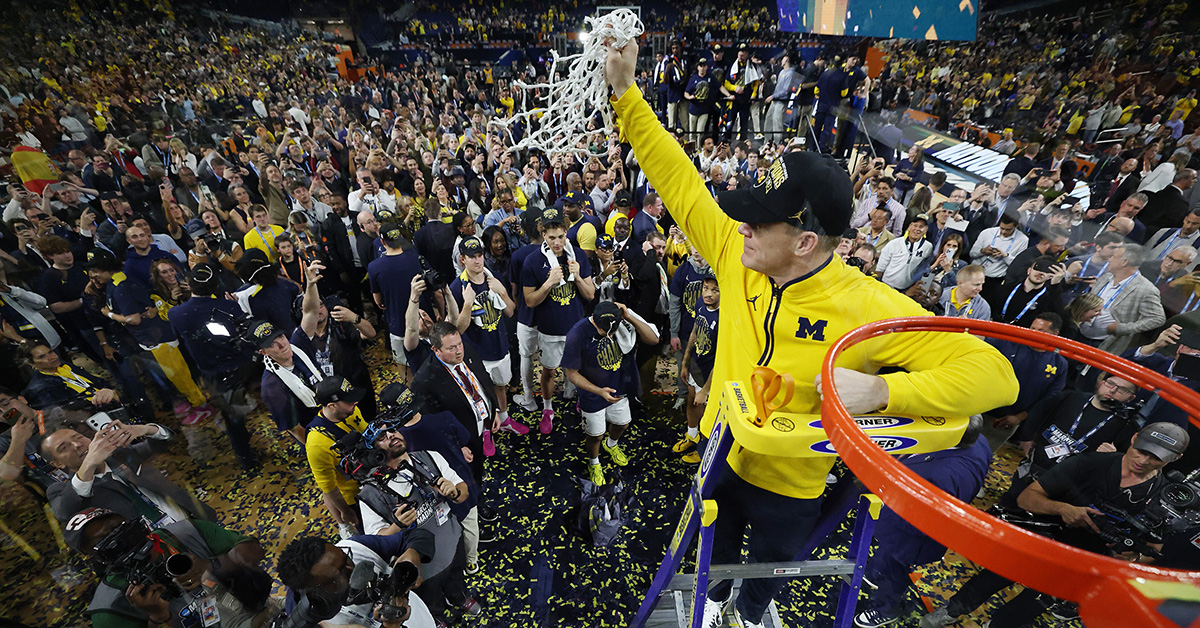
Every March, 68 men’s college basketball teams punch their tickets to the NCAA Tournament. Schools load up on NIL-funded rosters, raid the transfer portal for plug-and-play talent, and circle Selection Sunday like it’s a holy day.
Meanwhile, Army, Navy, and Air Force are mostly watching from the couch.
That needs to change.
The service academies should have dedicated at-large berths in the NCAA Tournament, or at a minimum, a guaranteed path that accounts for the very specific and very intentional structural disadvantages they operate under. Not as charity. They are playing a completely different game under a completely different set of rules, and still showing up every year.
A Level Playing Field that Isn’t
The landscape of college basketball in 2026 is essentially a bidding war.
Following the House v. NCAA settlement approved in June 2025, Division I schools can now add direct institutional money on top of the NIL collective market that already existed. Blue-blood programs are spending tens of millions to build rosters. Five-star recruits have agents. Quarterbacks leave midseason over contract disputes.
Army, Navy, and Air Force can offer none of that. Their athletes commit to military service. They operate under academic requirements that would disqualify most Power Four recruits before they hit the gym. A policy requiring two years of service before pursuing professional sports has meant that even the rare academy player with pro potential is largely off-limits to the scouts building NIL pitch decks.
Comparing a service academy basketball program to a Big 12 school in the same recruiting cycle is a bit like comparing a Humvee to a Formula 1 car. They are both vehicles. That is about where the similarity ends.
The History Is There
It is not like the academies have been irrelevant.
Navy reached the Elite Eight of the NCAA Tournament as a No. 7 seed in the magical 1985-86 season, taking down national powerhouse Syracuse in the second round behind a 7-foot-1 junior center named David Robinson. Robinson set NCAA records for blocked shots in a single game and single season that year. The San Antonio Spurs selected him with the first overall pick in the 1987 NBA Draft. Robinson went on to become one of the greatest centers in NBA history, but only after fulfilling his service commitment first.
Army has never been to the NCAA Tournament, and Air Force is winless in four trips to the event. But the reason Army has never appeared is not a lack of decent teams. The Black Knights refused NCAA tournament invitations in 1944 and 1968. The 1944 team went undefeated and was retroactively named national champion by the Helms Athletic Foundation. They skipped the tournament because World War II was going on, which is a pretty solid excuse.
The 1968 refusal is arguably more famous. Coach Bob Knight turned down an NCAA bid in favor of the NIT, because he thought his team had a better shot at winning it without Lew Alcindor (Kareem Abdul-Jabbar) and UCLA dominating the bracket. Knight was practical like that.
Two of the greatest coaches in college basketball history, Knight and his Army point guard, Mike Krzyzewski, built their early careers at West Point and never got their teams into the tournament. That is not a talent pipeline problem. That is a structural one.
What a Fix Looks Like
The NCAA has shown it can create special accommodations. The tournament expanded from 65 to 68 teams in 2011, largely to include more at-large options.
Adding a service academy provision is not a radical concept. It acknowledges that three programs producing commissioned military officers cannot and should not be evaluated against the same standard as schools funneling players to the NBA.
One reasonable proposal would mirror the Commander-in-Chief’s Trophy model that works so well in football. The annual three-way series between Army, Navy, and Air Force gives the academies a meaningful competition that exists outside the traditional conference framework.
A similar structure in basketball could determine which service academy earns a guaranteed at-large bid each season, based on head-to-head record and overall performance against Division I competition. Not a handout. A framework that recognizes competition happening within a specific and uniquely constrained context.
The alternative keeps producing what the last 20-plus years have produced. Since Navy’s Elite Eight run in 1986, service academy basketball has been largely absent from March. Air Force’s last tournament appearance was in 2006. Navy’s was in 1998. Army is still waiting for its first.
College basketball talks constantly about Cinderella stories, about underdogs and programs that do not have the resources of the blue bloods but find a way to compete anyway. George Mason. Virginia Commonwealth. Saint Peter’s. The country loses its mind when a small school takes down a powerhouse.
The service academies are the ultimate version of that story, except they never get to tell it on the biggest stage. Their players wake up before dawn for physical training, carry full academic loads, and know their postgame plans involve a commissioning ceremony rather than an NBA workout.
When those teams put together something special, they deserve a shot at March Madness.
The country already loves the pageantry of service academy sports. Give it a reason to watch basketball, too.
Don’t Miss the Best of We Are The Mighty
• Midshipmen edge Black Knights in the 126th Army-Navy Game • How the Army-Navy game of 1944 stopped World War II • These are the 5 presidential traditions around the Army-Navy Game
Why the service academies deserve their own spot in March Madness
Mighty MilSpouse
Some military nonprofits are MIA at a time when families need them most
By Sara Jane Ginn
How a bidding war inspired a WWI veteran to push for an NFL draft
‘Masters of the Air’ got a definitive new edition from The Folio Society
How a steamboat carrying Union soldiers became ‘America’s Titanic’