How a Navy photographer snapped an iconic Artemis II astronaut photo
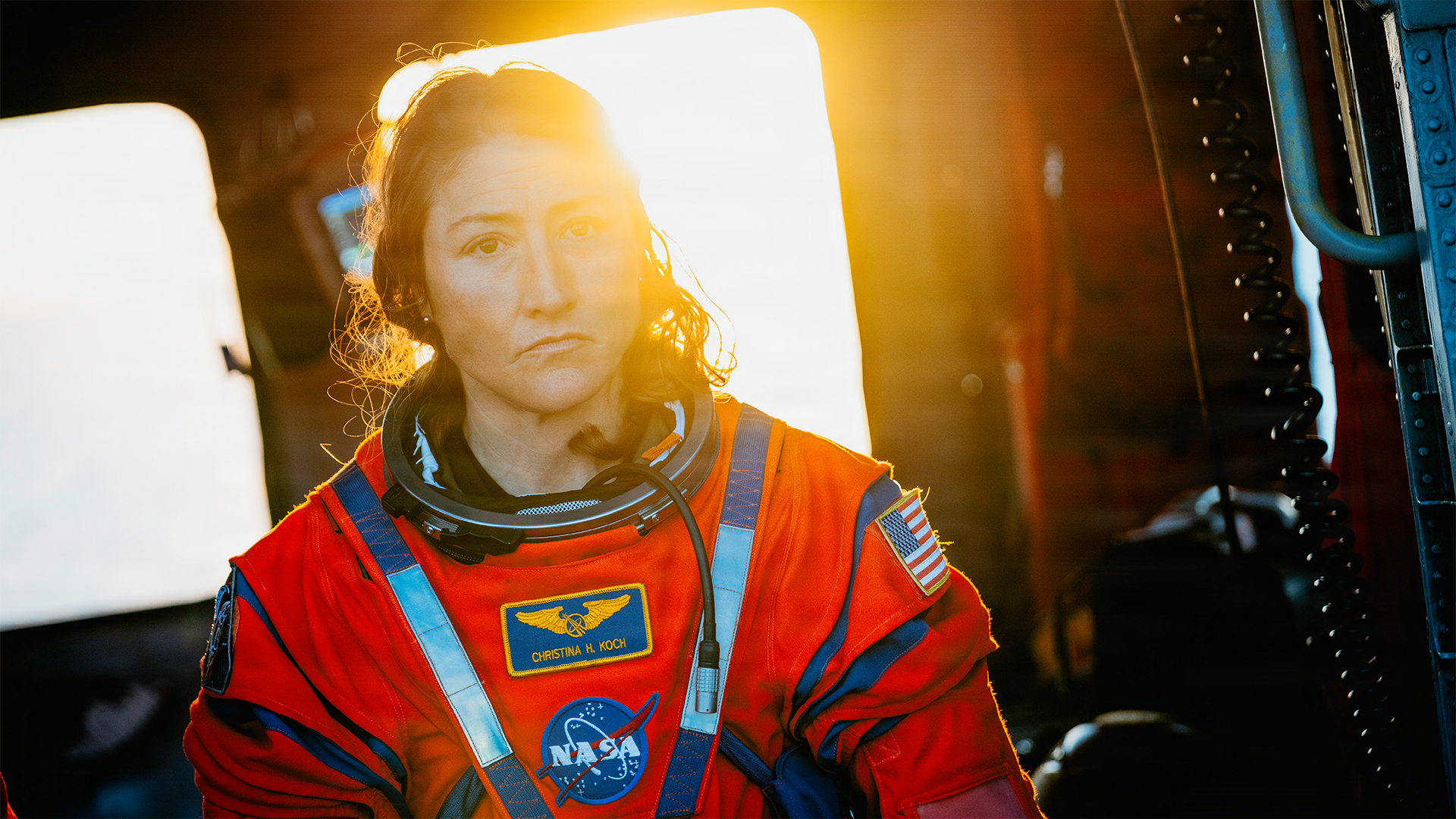
The Navy photographer who snapped a defining photo of the Artemis II astronaut crew’s return to Earth swears he wasn’t trying to create an iconic American image. In fact, he barely even recalls taking it.
“To be honest, I don’t even remember taking the photo,” Mass Communication Specialist 2nd Class August Clawson told Task & Purpose. Clawson snapped the photo April 10 on the deck of the USS John P. Murtha after two Navy helicopters retrieved the Artemis crew from their Pacific Ocean splashdown, just as the sun began to set. “I kind of remember thinking about the sun, trying to snap a bunch of photos as quick as possible. I didn’t really realize I got that photo until I sat down, like, 30 minutes later and started processing the imagery, and I saw that photo, and I was like, ‘No way I got that.’”
The photo Clawson “got” is of astronaut Christina Koch in a moment of unreadable reflection, or perhaps just exhaustion, in the very final moments of her journey as the first woman to travel to the moon. Sitting in the open cabin door of a Navy MH-60, Koch’s bright orange NASA spacesuit clashes with the harsh grays of the military helicopter, but almost perfectly matches the orange glow of a late-day sun over her shoulder, shining through the helicopter’s window.
The Navy quickly released a flood of photos and videos of the recovery, including many by Clawson, two of Koch among them.
By the next morning, Clawson said, his phone was full of messages from friends who’d seen the pictures on TV and news reports, or rapidly spreading across Tik Tok, Instagram and other social feeds.
The path to get those photos, Clawson said, began to take shape in February when NASA delayed the Artemis II launch to April.
“I was hoping for the April timeframe because the windows for the recovery were at Golden Hour,” Clawson said. Golden Hour, shorthand for the final hour before sunset, is coveted by photographers. “Right before the sun hits the horizon, everything’s bathed in golden light. It’s definitely the best time to take photos. All the colors pop, and everything seems a little softer, less harsh.”
An April 1 launch would mean a late-day April 10 splashdown off the coast of San Diego. Dive teams from Explosive Ordnance Disposal Group 1, staged aboard the Murtha, would rush to their capsule before two MH-60s flew them back to the ship. Clawson, the EOD group’s mass communications specialist, would be waiting.
In would be a moment Clawson had been preparing for since he was a kid in Memphis, Tennessee.
“When I moved into high school, portraits and skateboard photography were really my passion,” he said. “I wanted to keep doing photography right out of high school, so I explored my options in the military, and I found this job in the Navy — mass communication specialist — and it’s the only job I wanted.”
Clawson worked for three years aboard the USS George Washington aircraft carrier, taking pictures amid the chaos of a Navy flight deck, sometimes in bright sunlight, sometimes in the middle of the night.
“I think nighttime was where I shined,” he said. “It’s pretty hard to capture good images of the flight deck at night. I had three years on the carrier to kind of figure it out. By my last year there, I feel like I was putting out some pretty cool images. Kind of looked like, you know, like a spaceship, like, kind of ‘Star Wars’ vibes with all the different colors.”
While Clawson took hundreds of photos of roaring planes and crew members dashing across open decks, nearly all his collections also include at least a few striking, upclose portraits of a sailor’s face — an F/A-18 pilot buckling his helmet, a Seabee welder under his mask, an aircraft handler through her googles — unposed, unsmiling, unexpected.
Each is an early echo of Clawson’s Koch picture.
“I’d always focus on portraits,” Clawson said. “Sometimes it can be difficult because I’m shooting a lot of uncontrolled action. So when I see the opportunity to do that, I definitely jump in and try to grab a portrait that kind of shows who the person is. I don’t necessarily like taking photos of people smiling. I just really want to show who the person is. And I feel like, you best see that when they’re kind of just making the face that they want to make, how their face normally is, without them distorting it.”
In 2024, Clawson was named the “Communicator of the Year” for the entire Department of Defense, mostly on the strength of his work on the George Washington.
In 2025, he reported to EOD Group 1, which was already deep in planning for the Artemis mission.
As the helicopters landed on the Murtha, Clawson was unfazed by the noise and tight quarters of a flight deck. With the sun just above the horizon, he moved closer as the crews opened the cabin doors. But not too close.
“I didn’t want to shove a camera into their faces,” he said. “I was trying to be kind of respectful and not intrusive, because they did just get back from space.”